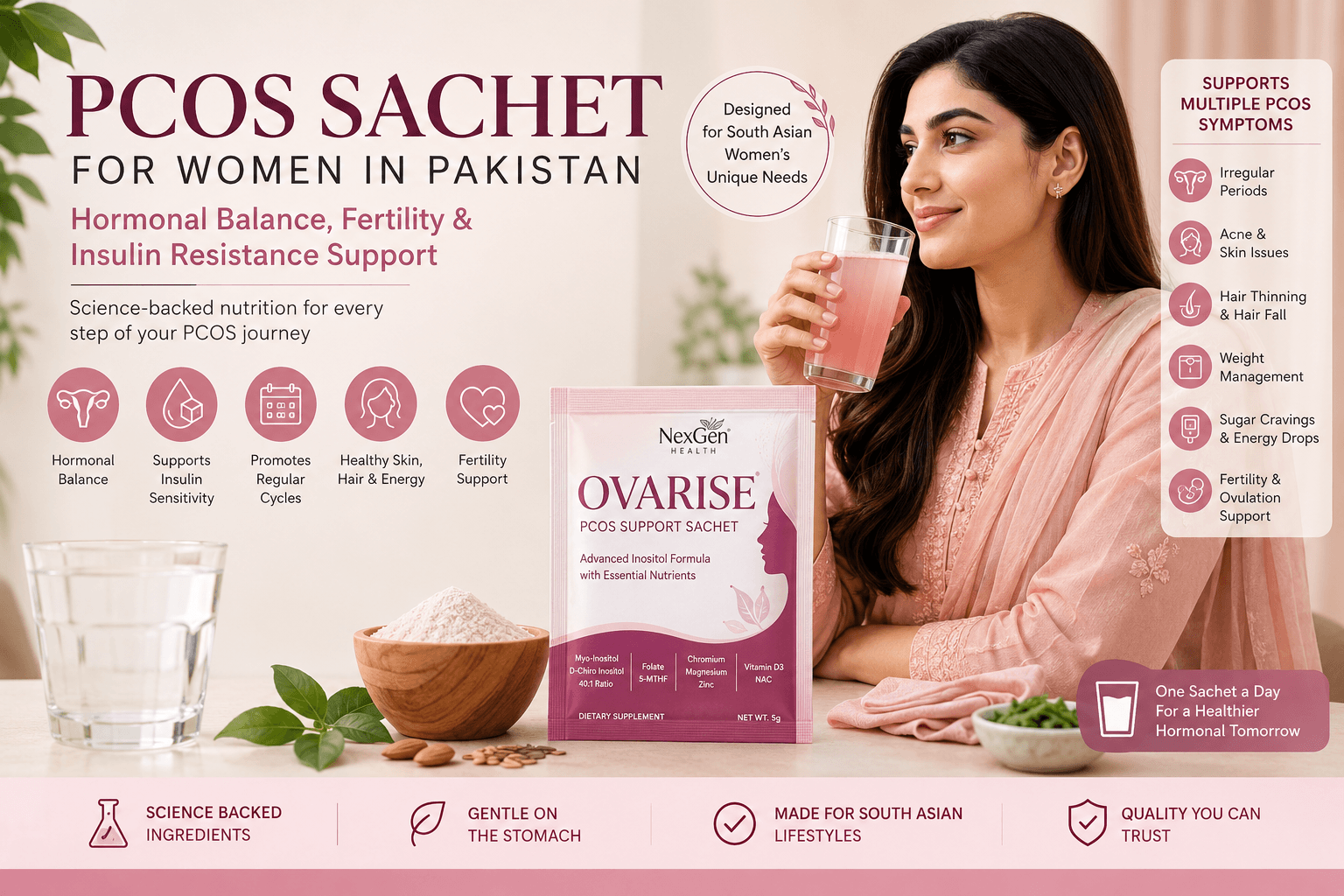
Understanding PCOS: Why PCOS Hits Differently in Pakistan
Polycystic Ovary Syndrome (PCOS) is one of the most common hormonal disorders affecting women of reproductive age, yet its impact on Pakistani women is often underestimated. While PCOS affects women worldwide, South Asian populations face unique challenges due to a combination of genetic predisposition, dietary habits, lifestyle factors, and limited access to specialised healthcare. Many women spend years struggling with irregular periods, acne, weight gain, and fertility concerns without receiving a proper diagnosis.
- 1 in 10 women affected by PCOS globally
- 50-75% of women with PCOS have insulin resistance
- 80% experience weight management difficulty
The prevalence of insulin resistance among South Asian women is particularly significant. Research shows that many women with PCOS develop metabolic symptoms even at body weights that would be considered normal by conventional standards. In Pakistan, common dietary patterns such as frequent consumption of refined carbohydrates, sweetened tea, and low-protein meals can further aggravate insulin resistance, making symptom management more challenging.
What Is a PCOS Sachet?
A PCOS sachet is a single-serving powdered nutritional supplement designed to support women experiencing hormonal imbalances associated with PCOS. Typically dissolved in water and consumed daily, these sachets contain a carefully selected combination of nutrients that target insulin resistance, hormonal regulation, ovulation support, and reproductive health.
Unlike standard multivitamins, a dedicated PCOS sachet focuses on addressing the underlying metabolic and hormonal disruptions that contribute to irregular menstrual cycles, fertility difficulties, acne, fatigue, and weight-management challenges. Because the nutrients are delivered in powder form, many women find them easier to consume and absorb compared to multiple tablets or capsules.
The sachet delivers the full ingredient dose in an absorbable form the moment you drink it. There is no capsule coating to break down first.
The format of a supplement may seem like a minor detail, but it can significantly influence consistency and absorption. When nutrients are dissolved in water, they become readily available for digestion and absorption without requiring the breakdown process associated with capsules or tablets. This can be particularly helpful for women who experience digestive sensitivity, bloating, or gastrointestinal discomfort.
The sachet format also simplifies daily supplementation. Rather than remembering several pills throughout the day, women can establish a straightforward routine by preparing a single drink each morning. Since long-term consistency is one of the most important factors in PCOS management, convenience often plays a larger role than many people realise. The Ovarise Sachet is formulated with this daily-use principle in mind.
The Ingredients That Make a Difference
The effectiveness of a PCOS sachet depends largely on its formulation. Below is a breakdown of the evidence-supported nutrients that a well-formulated PCOS supplement sachet should contain, and precisely how each one addresses the underlying mechanisms of polycystic ovary syndrome.
- Myo-inositol
- The most extensively researched nutrient for PCOS management. Supports insulin sensitivity, encourages healthy ovarian function, and may contribute to more regular menstrual cycles.
- D-chiro inositol
- Works alongside myo-inositol to support hormonal balance and insulin regulation. When used in the correct 40:1 ratio, these two compounds complement one another and address several metabolic aspects of PCOS.
- Folate (5-MTHF)
- Supports reproductive health and preconception wellness. The active methylated form bypasses the MTHFR gene variant common in South Asian populations, making it particularly relevant for Pakistani women.
- Chromium
- Contributes to healthy blood sugar regulation. Particularly relevant for women with carbohydrate-heavy diets, where chromium depletion is accelerated. Helps reduce sugar cravings that often intensify with blood sugar dysregulation.
- Magnesium
- Plays an important role in stress management, sleep quality, and insulin sensitivity. Magnesium deficiency correlates with both insulin resistance and elevated anxiety, two features common in PCOS.
- Vitamin D3
- Vitamin D deficiency is extremely common among Pakistani women and has been linked to worsening PCOS symptoms. Low D3 worsens insulin resistance and disrupts the hormonal communication pathway between the brain and ovaries.
- Zinc
- Helps support skin and hair health by reducing DHT conversion. Lower DHT means reduced acne, slower facial hair growth, and less scalp hair thinning. Zinc also supports immune regulation and gut health.
- N-acetyl cysteine (NAC)
- Provides antioxidant support and may assist with ovulation and inflammation management. An antioxidant precursor to glutathione that reduces systemic inflammation associated with PCOS.
Why the 40:1 Inositol Ratio Matters
One of the most important scientific considerations in PCOS supplementation is the ratio between myo-inositol and d-chiro inositol. Clinical research consistently supports a 40:1 ratio because it closely resembles the natural balance found within ovarian tissue. This ratio appears to provide optimal support for insulin signalling and ovarian function. Products that fail to disclose their ratio or contain disproportionate amounts of d-chiro inositol may not deliver the same benefits demonstrated in clinical studies. The Ovarise Sachet is formulated at this clinically studied 40:1 ratio.
Which PCOS Symptoms Can a Sachet Support?
PCOS affects multiple systems throughout the body, which is why symptoms often appear unrelated at first. A properly formulated sachet is designed to address several underlying mechanisms simultaneously. Browse NexGen Health's full women's health supplements to explore what supports each of these areas.
- Irregular periods - Improved insulin sensitivity supports healthier ovulation patterns and more predictable cycle length. (Myo-inositol, D-chiro inositol)
- Insulin resistance - Chromium and inositol improve cellular glucose uptake and reduce fasting insulin levels. (Chromium, myo-inositol, magnesium)
- Acne - As androgen activity becomes more balanced, many women notice skin improvements alongside reduced sebum production. (Zinc, NAC, vitamin D)
- Sugar cravings - Chromium stabilises post-meal blood glucose spikes; inositol reduces compensatory insulin surges. (Chromium, inositol)
- Hair thinning - Zinc inhibits DHT; reduced androgen load slows follicle miniaturisation and excessive facial hair growth. (Zinc, folate)
- Fertility challenges - Inositol supports follicular development and oocyte quality; folate supports early implantation and preconception wellness. (Myo-inositol, folate, vitamin D)
- Fatigue - Correcting vitamin D and magnesium deficiencies improves mitochondrial energy production and overall energy levels. (Vitamin D, magnesium)
- Mood fluctuations - Magnesium modulates cortisol response; inositol has secondary effects on serotonin signalling and stress regulation. (Magnesium, inositol)
Because each woman's hormonal profile is different, the degree and speed of improvement can vary considerably. However, many women report progress across multiple symptom categories rather than experiencing benefits in only one specific area.
What to Expect During the First 90 Days
The most common question women ask before starting a PCOS supplement sachet is: how long before something changes? The honest answer is that the timeline varies, but the pattern of change is fairly consistent and worth understanding before you begin.
-
Days 1-14: The Quiet Start
The first few weeks often involve subtle internal changes that are not immediately visible. During this period, the body begins adjusting insulin signalling pathways and replenishing nutrient stores. Some women notice reduced cravings or mild improvements in digestion, but dramatic changes are uncommon.
-
Weeks 3-6: The First Shifts
Between weeks three and six, many women begin experiencing more noticeable improvements in energy levels, appetite control, and cycle predictability. Skin concerns may gradually improve, and blood sugar fluctuations often become less pronounced. Women describe sugar cravings as present but quieter and less urgent.
-
Weeks 7-10: Hormonal Patterns Beginning to Shift
By the second and third month, hormonal changes typically become more apparent. Menstrual cycles may become more regular, acne can begin to diminish, and women attempting to conceive may observe signs of improved ovulation. Hair shedding typically begins to reduce here as androgen levels stabilise.
-
Day 90 and Beyond: Consolidated Improvement
At the ninety-day mark, many women report that improvements in energy, mood, sleep quality, and overall well-being have become significantly more noticeable. Women who experienced longer cycles typically see them move closer to a 28 to 35 day range. Many women only recognise at this point how significant the fatigue had been. You can order a 90-day supply of the Ovarise Sachet directly from NexGen Health.
Women often tell us they did not realise how exhausted and inflamed they had been living until they had three months of consistent supplementation to compare against.
A note on fertility outcomes: clinical evidence for inositol's effect on ovulation and oocyte quality is strongest at the three to six month mark. For women with PCOS who are trying to conceive, a PCOS fertility support protocol should be maintained for at least 12 weeks before drawing conclusions, and always in conjunction with a gynaecologist's guidance.
How to Take a PCOS Sachet for Best Results
The Morning Advantage
For most women with PCOS, taking a hormonal balance sachet in the morning provides the greatest benefit because it aligns supplementation with the body's natural insulin and cortisol rhythms. Consuming the drink shortly before breakfast, ideally 15 to 20 minutes before, may help support healthier blood sugar responses throughout the day.
Split Dosing for Better Effect
Some women choose to divide their inositol intake between morning and evening to maintain more consistent levels in the bloodstream. Inositol has a relatively short half-life in plasma, and maintaining more consistent levels across the day supports more steady insulin signalling. Women who prefer this approach can complement the Ovarise Sachet with the Ovarise Tablet for consistent inositol coverage throughout the day.
What to Avoid
Regardless of timing, consistency remains the most important factor. Missing several consecutive days can reduce the cumulative benefits that develop over time. It is also advisable to avoid mixing the sachet with sweetened milk tea. The tannins present in tea and milk proteins may interfere with the absorption of certain minerals, particularly zinc and magnesium.
Who Should Consider a PCOS Sachet?
A PCOS sachet may be appropriate for women who have been diagnosed with PCOS or who consistently experience symptoms associated with hormonal imbalance and insulin resistance. Supplementation is a supportive intervention that works alongside dietary adjustments and medical guidance, not in place of either.
You may be a strong candidate if you experience two or more of the following: irregular or absent menstrual cycles; difficulty losing weight despite dietary changes; persistent acne that worsens around the menstrual cycle; excessive facial hair or scalp hair thinning; strong sugar cravings particularly in the afternoon; a formal or suspected diagnosis of insulin resistance or polycystic ovarian syndrome; difficulty conceiving. Ovarise is designed specifically for women managing this combination of symptoms. For those who prefer a tablet, the Ovarise Tablet contains the same core PCOS formula in a convenient daily tablet.
However, supplementation should not replace professional medical care. Women who are pregnant, breastfeeding, taking prescription medications including combined oral contraceptives or metformin, or managing other medical conditions should consult a qualified healthcare professional before beginning any new supplement regimen. You can also reach the NexGen Health support team with any questions about which product is right for you.
Frequently Asked Questions
- Can a PCOS sachet help with weight loss?
- It improves insulin sensitivity, which reduces the hormonal environment that drives fat storage, particularly around the abdomen. It is not a fat burner but an insulin sensitiser that removes some of the metabolic obstacles in the way of weight loss.
- Will my period become regular?
- For many women, yes, particularly those whose irregular cycles are driven by insulin resistance and anovulation. Clinical evidence for myo-inositol restoring menstrual regularity is reasonably strong in the three to six month window, though results vary depending on dietary habits and severity of hormonal disruption.
- Is a PCOS sachet safe to take while trying to conceive?
- Ingredients such as myo-inositol and folate are commonly used in fertility-support protocols and have strong safety profiles in the preconception window. Discuss timing and dosing with your gynaecologist, particularly if you are also considering fertility treatments.
- How long must I take it before stopping?
- PCOS is a chronic condition and does not resolve with a short supplement course. Women who stop at three months typically see gradual symptom regression within two to four months. It is best treated as a long-term daily input rather than a finite course.
- Can it be taken alongside metformin?
- Both inositol and metformin operate on overlapping insulin signalling pathways. Some trials show additive benefit, but this is a conversation to have with your prescribing doctor. Do not adjust metformin dosing based on supplement use without medical supervision.
- Is it suitable for girls in their teens?
- The core ingredients are safe at standard doses for adolescents, but dosing requirements differ from adult women. Any supplement protocol for a teenager should involve a paediatrician or adolescent gynaecologist rather than self-prescribing adult-dose formulations.
Supporting Your Results Through Diet and Lifestyle
No supplement can fully compensate for lifestyle factors that contribute to insulin resistance. In Pakistan, simple dietary adjustments often provide meaningful benefits when combined with supplementation. White rice, maida-based rotis, and heavily sweetened beverages create rapid glucose spikes that trigger compensatory insulin surges, which drive the insulin resistance that makes PCOS worse.
Replacing one daily serving of sweetened tea with water, increasing protein intake at breakfast, and incorporating more vegetables into meals can help stabilise blood sugar levels. Traditional foods such as lentils, leafy greens, yogurt, grilled proteins, and whole grains fit naturally within a PCOS-friendly eating pattern. Rather than completely abandoning cultural foods, most women benefit more from making sustainable modifications that can be maintained long term.
The Insulin Resistance Cycle
Understanding that PCOS is often a self-reinforcing loop helps explain why small changes have outsized effects. Insulin resistance causes the ovaries to overproduce androgens. Elevated androgens disrupt ovulation. Disrupted ovulation perpetuates hormonal imbalance. Hormonal imbalance worsens insulin signalling. The sachet, alongside dietary adjustments, works to interrupt this cycle at the insulin resistance node, which is the most accessible intervention point. Explore the full range of women's health supplements at NexGen Health to find what supports your complete hormonal health picture.
Final Thoughts: A Daily Ritual, Not a Miracle
A PCOS sachet should be viewed as a supportive tool rather than a miracle solution. PCOS is a complex, long-term condition that requires ongoing management. However, evidence-based ingredients such as myo-inositol, d-chiro inositol, chromium, magnesium, vitamin D, zinc, and folate can play a meaningful role in supporting hormonal balance, metabolic health, fertility, and overall well-being.
For Pakistani women navigating irregular periods, insulin resistance, acne, fertility concerns, and persistent fatigue, a well-formulated sachet can become part of a broader strategy that includes nutrition, lifestyle modifications, and appropriate medical guidance. The greatest benefits typically come from consistency, patience, and realistic expectations over time.
The women who see the most improvement are the ones who take the sachet every day, understand what to expect and when, and make two or three supporting dietary adjustments rather than expecting the supplement to carry the full weight of hormone regulation alone. Start with the Ovarise Sachet or the Ovarise Tablet, both available at NexGen Health.