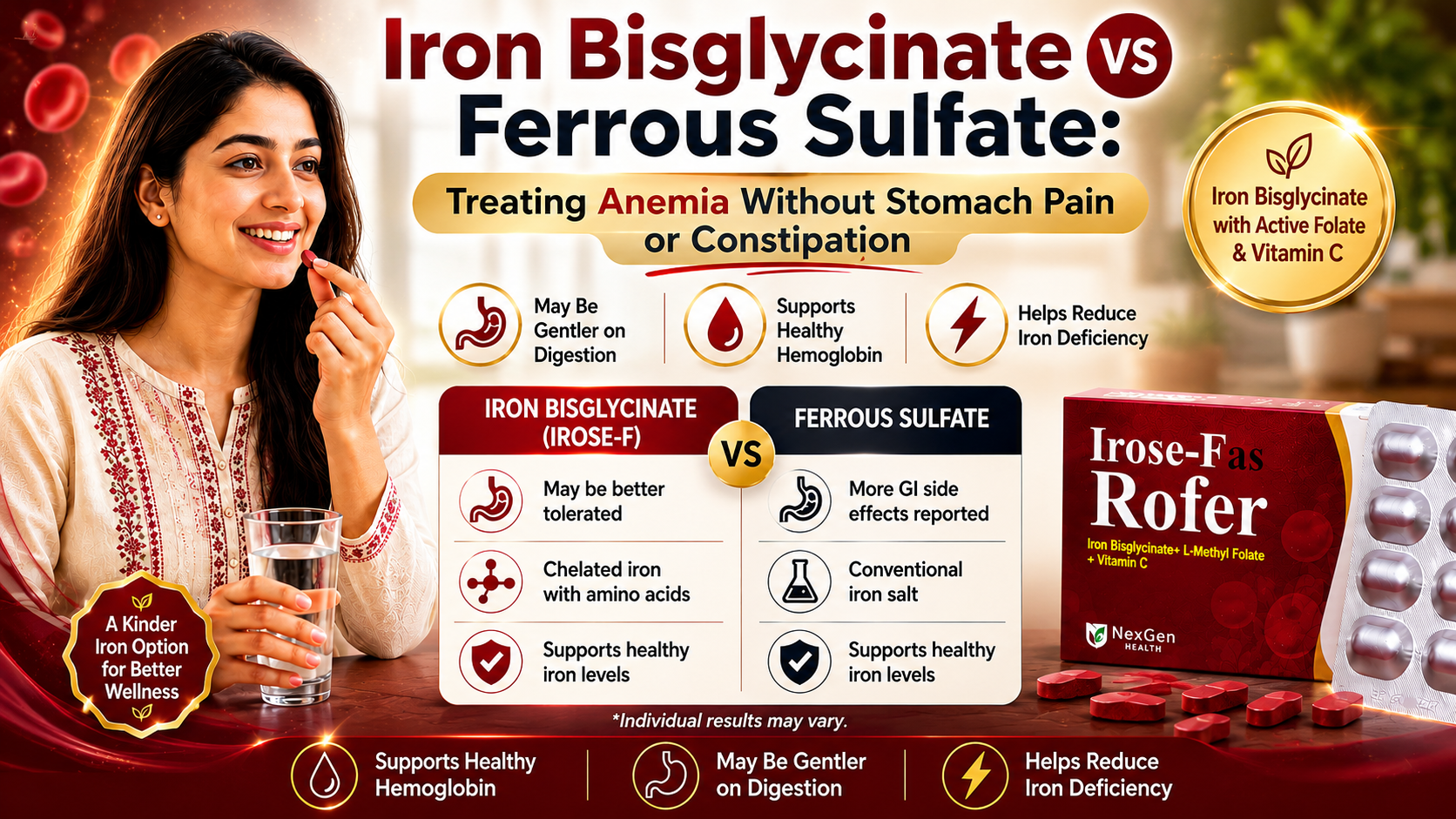
Iron deficiency can leave people feeling tired, weak, dizzy, and unusually short of breath. Choosing an iron supplement becomes difficult when traditional tablets cause constipation. This is why many people search for an iron supplement without constipation in Pakistan. Others want the best iron tablet for women with better digestive tolerance. Iron bisglycinate has become popular because of its different formulation. Research suggests this form may provide effective iron support with fewer gastrointestinal problems.
Ferrous sulfate remains a widely established oral iron supplement for treating iron deficiency. However, gastrointestinal side effects can make regular supplementation difficult for some people. A systematic review analyzed forty-three randomized trials involving 6,831 adult participants. Ferrous sulfate significantly increased gastrointestinal side effects compared with placebo treatments. Constipation was among the commonly reported concerns across those clinical studies.
The better choice depends on your iron needs and personal digestive tolerance. No iron supplement can guarantee completely constipation-free results for everyone.
NexGen Health offers nutritional supplementation options designed around specific everyday wellness needs. Its iron-focused range includes formulations intended for people seeking practical nutritional support.
Iron Bisglycinate vs Ferrous Sulfate: What Makes Them Different?
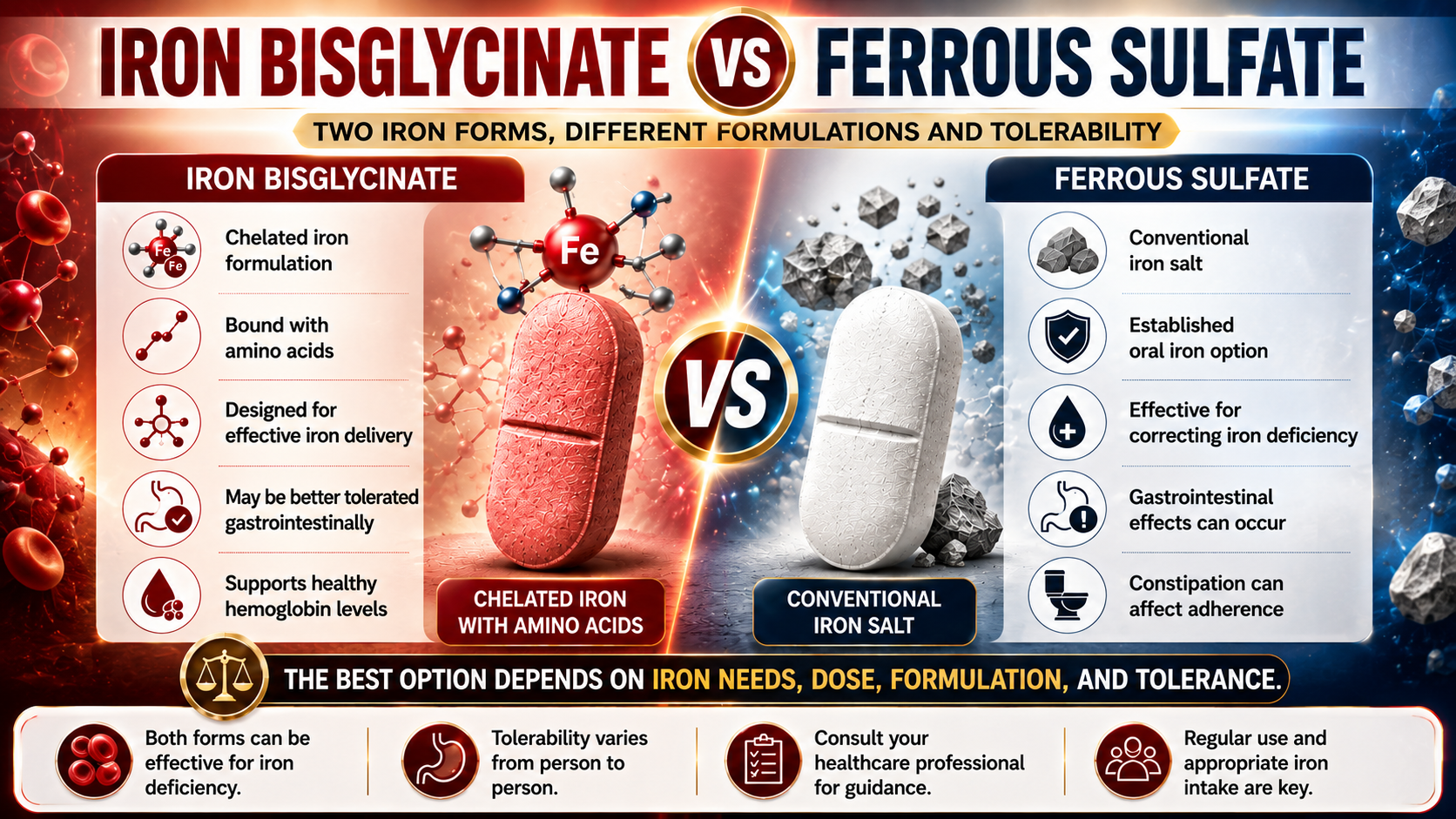
Iron bisglycinate is a chelated form combining iron with amino acids. This structure differs from conventional iron salts such as ferrous sulfate. Researchers have studied bisglycinate because of its potential absorption and tolerability advantages.
Ferrous sulfate contains iron in a conventional salt formulation used extensively worldwide. It remains effective, affordable, and widely available for treating iron deficiency. However, gastrointestinal discomfort can affect adherence among people taking traditional iron supplements.
Iron bisglycinate may offer an alternative for people experiencing digestive problems. Clinical evidence suggests it can improve hemoglobin and ferritin concentrations. Some studies also report fewer gastrointestinal adverse events with bisglycinate supplementation.
That does not mean bisglycinate completely eliminates constipation or stomach discomfort. Individual responses can vary depending on dosage, diet, health status, and formulation.
Bioavailability & Side Effects Comparison: Irose-F vs Traditional Iron Tablets
| Feature | Irose-F Iron Bisglycinate | Traditional Ferrous Sulfate |
|---|---|---|
| Iron form | Chelated iron bisglycinate | Conventional iron salt |
| Iron support | Provides supplemental iron | Provides supplemental iron |
| Digestive tolerance | May offer better tolerance | Gastrointestinal effects occur more frequently |
| Constipation | May be easier for some users | Commonly reported concern |
| Additional nutrients | Includes active folate and vitamin C | Depends upon individual formulation |
| Main advantage | Focuses on iron support and tolerability | Established conventional iron option |
| Key consideration | Check elemental iron and serving information | Check elemental iron and serving information |
Irose-F Iron Bisglycinate Tablets from NexGen Health provide iron bisglycinate alongside supportive nutritional ingredients. The formulation includes active folate and vitamin C for additional nutritional support.
For people comparing the best iron tablet for women, tolerability deserves serious consideration. A supplement becomes less useful when digestive problems repeatedly interrupt consistent use.
This becomes especially relevant when someone previously stopped conventional iron because constipation became difficult. Switching formulations may improve tolerability, although individual results can still differ.
Understanding Iron Bisglycinate Benefits
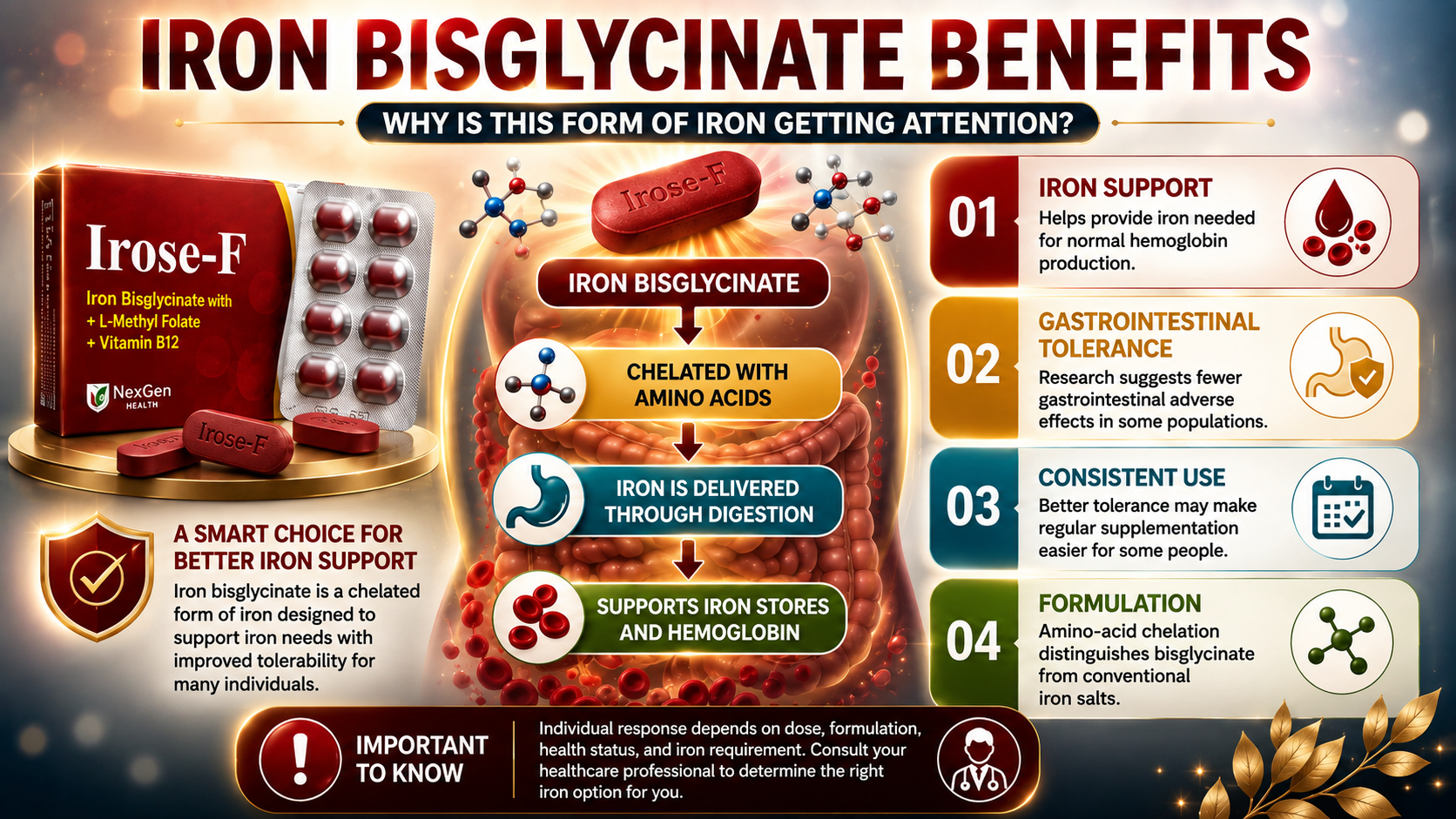
One important iron bisglycinate benefit involves its potential gastrointestinal tolerability. Researchers have compared bisglycinate against conventional iron supplements across randomized controlled trials. The evidence supports improvements in hemoglobin and ferritin with supplementation.
Another potential advantage involves formulation efficiency and practical supplementation. People often need continued iron intake when correcting established iron deficiency. A better-tolerated formulation may therefore make consistent supplementation easier.
However, bioavailability should not become a marketing promise without considering actual dosage. Different products can contain different amounts of elemental iron. Always compare the actual elemental iron amount between competing formulations.
The goal should remain appropriate iron replacement rather than choosing the highest possible dose. Excessive supplementation can cause gastrointestinal symptoms and other potentially serious complications.
For consumers exploring iron supplementation options, NexGen Health provides formulations focused on practical nutritional support. The Irose-F formulation combines iron bisglycinate with active folate and vitamin C.
A Helpful Option for Daily Hydration & Care
A targeted, research-backed formulation can help support your wellness journey. Gut Health & Digestive Care Kit is one option to consider as part of your daily routine for consistent, effective results.
Why Vitamin B12 Supports Red Blood Cell Formation
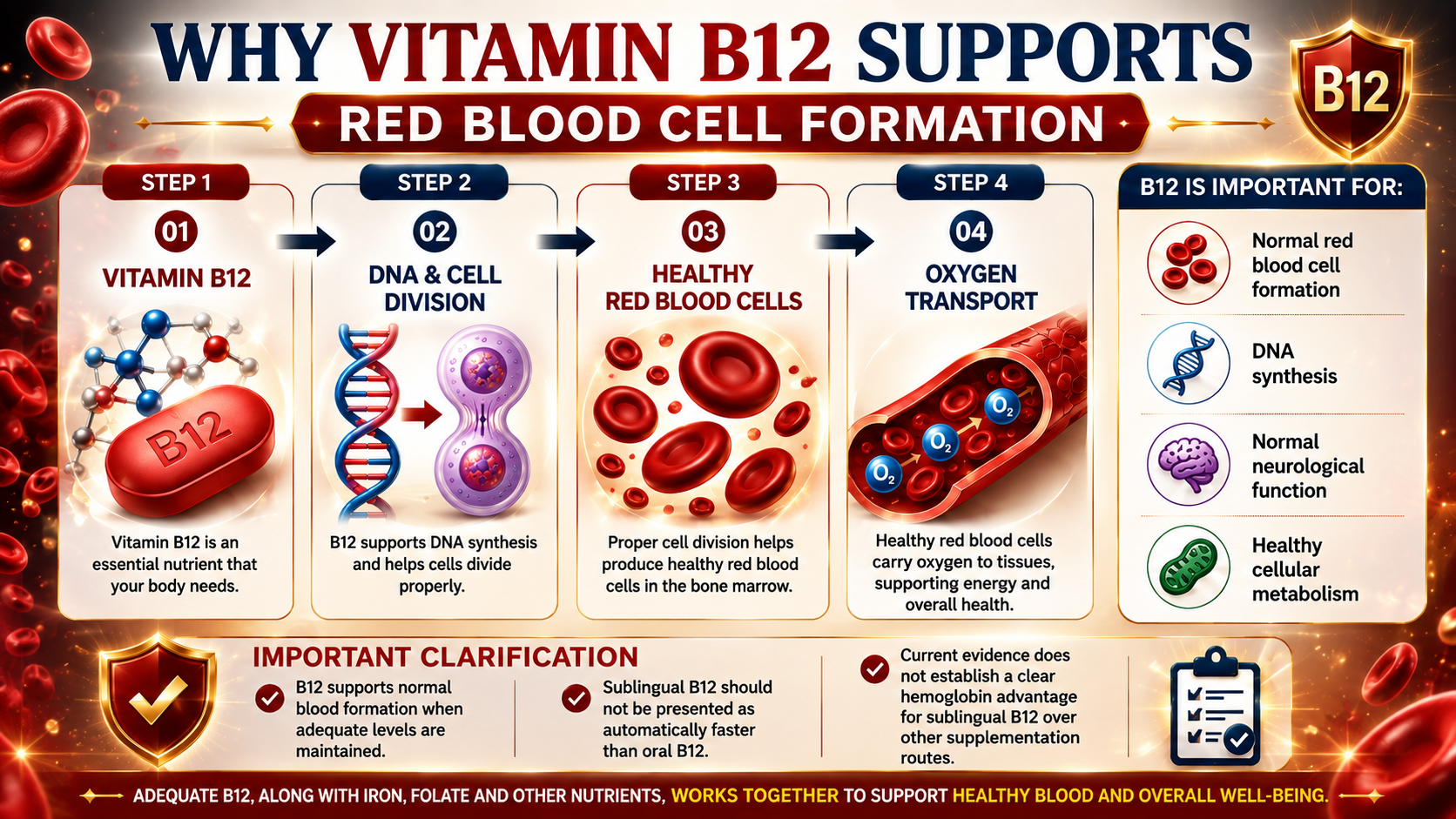
Iron is essential for hemoglobin production and normal oxygen transport throughout the body. However, healthy red blood cell production requires several nutrients beyond iron. Vitamin B12 plays an important role in normal blood formation and cellular metabolism.
This makes B12 particularly relevant when anemia has multiple nutritional causes. Correcting an existing B12 deficiency can support normal red blood cell production. However, sublingual B12 should not be described as automatically accelerating blood-cell formation.
Recent evidence compared different routes of vitamin B12 supplementation across multiple clinical studies. Researchers found improvements in B12 levels across oral, sublingual, and injectable approaches. No significant advantage was established for sublingual administration over other supplementation routes.
Therefore, sublingual B12 can provide a convenient supplementation format for appropriate users. Its main nutritional role remains supporting adequate vitamin B12 status.
The Iron Bisglycinate Anemia & Energy Pack from NexGen Health combines iron bisglycinate support with active folate and B12 supplementation. This approach can be convenient for people seeking multiple nutritional components together.
Symptoms of Low Hemoglobin in Pakistani Women and Men
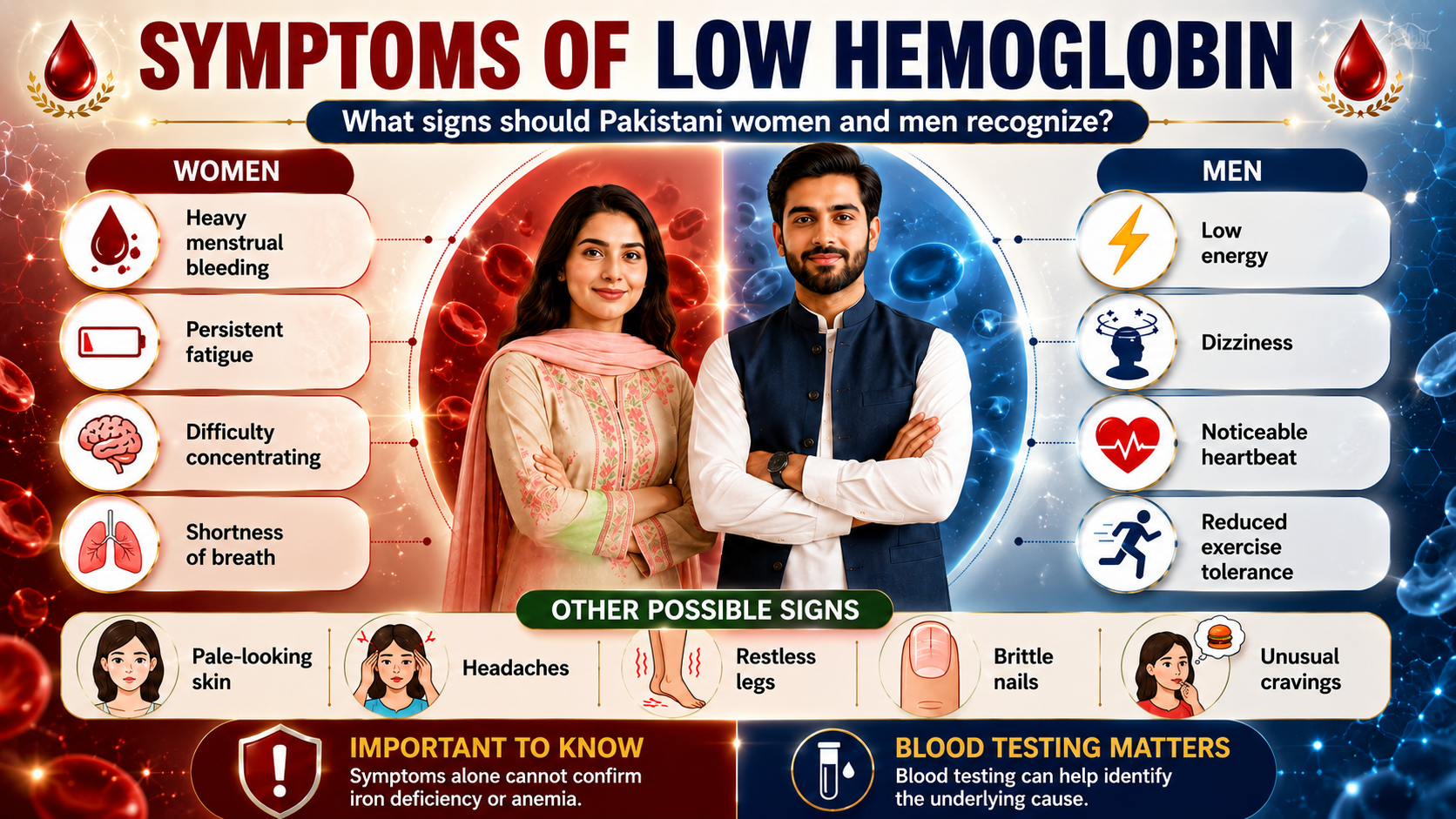
Low hemoglobin can develop gradually without immediately causing obvious symptoms. Some people simply attribute persistent tiredness to demanding work or insufficient sleep.
Common symptoms can include persistent fatigue, weakness, dizziness, headaches, and reduced physical endurance. Some people may also experience breathlessness during exercise or other physical activities.
Pale skin, noticeable heartbeats, and difficulty concentrating can sometimes accompany anemia. Iron deficiency may also cause unusual cravings, restless legs, brittle nails, or hair changes.
Women may face additional iron requirements because of menstruation and pregnancy. Heavy menstrual bleeding can contribute significantly to continuing iron loss. Men can also develop iron deficiency from dietary limitations or ongoing blood loss.
However, fatigue alone does not confirm iron deficiency or anemia. Several conditions can produce similar symptoms, including vitamin deficiencies and chronic illnesses.
Blood testing can help determine whether anemia or iron deficiency actually exists. Ferritin is particularly useful for evaluating the body's stored iron levels. The World Health Organization recognizes ferritin as an important marker of iron stores.
How To Choose an Iron Supplement Without Constipation
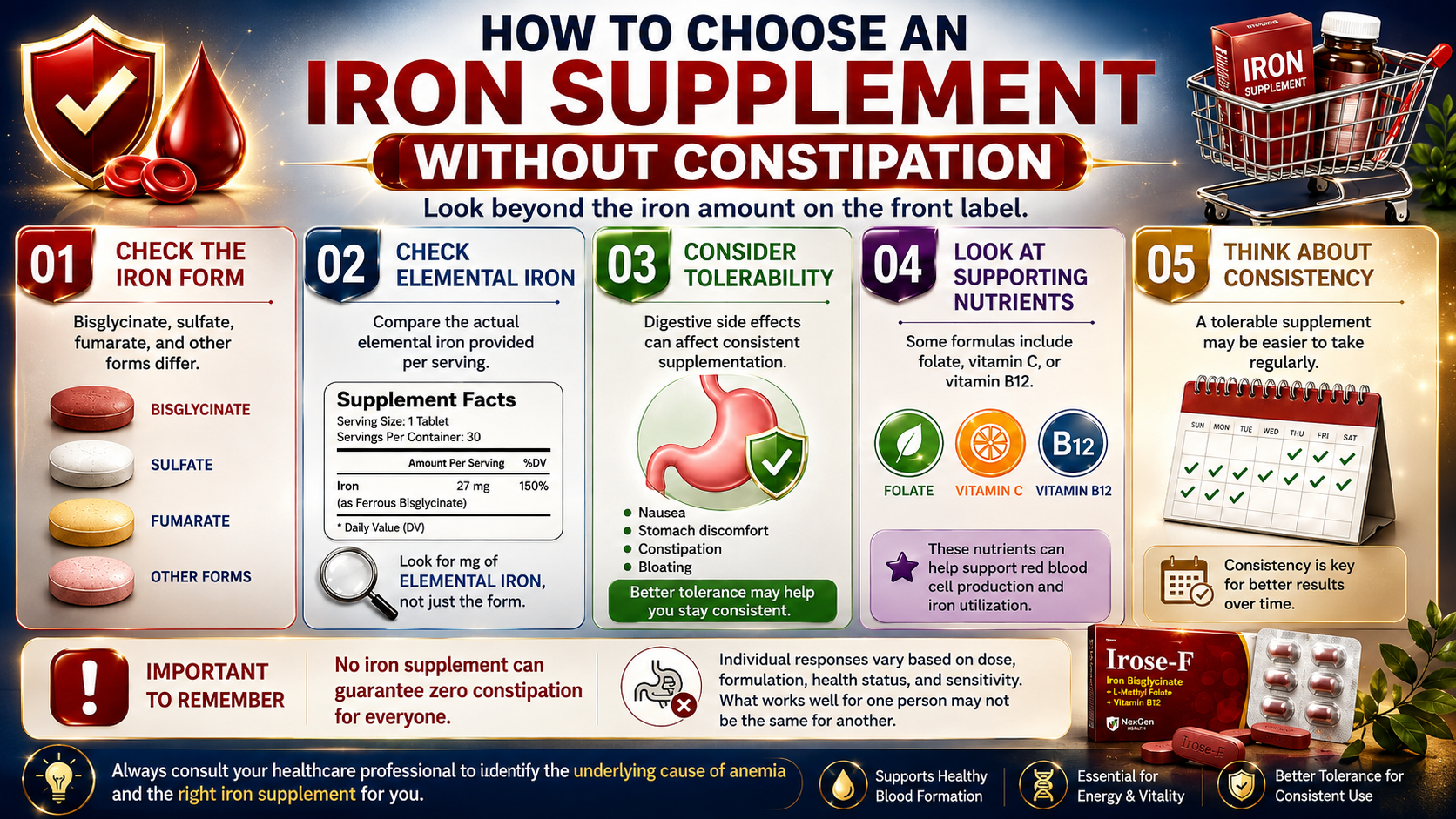
Start by identifying the reason behind your low iron or hemoglobin. A healthcare professional can recommend appropriate testing when deficiency is suspected.
Next, compare the actual iron formulation rather than relying only on product marketing. Ferrous bisglycinate may provide better gastrointestinal tolerance for certain individuals.
Check the elemental iron amount listed within each serving. This provides a more meaningful comparison between different iron formulations.
You should also consider supporting nutrients included within the formulation. Folate, vitamin B12, and vitamin C may complement an overall nutritional strategy.
Most importantly, consider whether you can consistently tolerate the supplement. A tolerable product may be easier to continue than conventional tablets causing persistent digestive problems.
NexGen Health provides several nutritional support options for people comparing iron supplementation products. Its iron-focused options include Irose-F and the broader anemia support combination.
Iron Bisglycinate vs Ferrous Sulfate: Which Should You Choose?
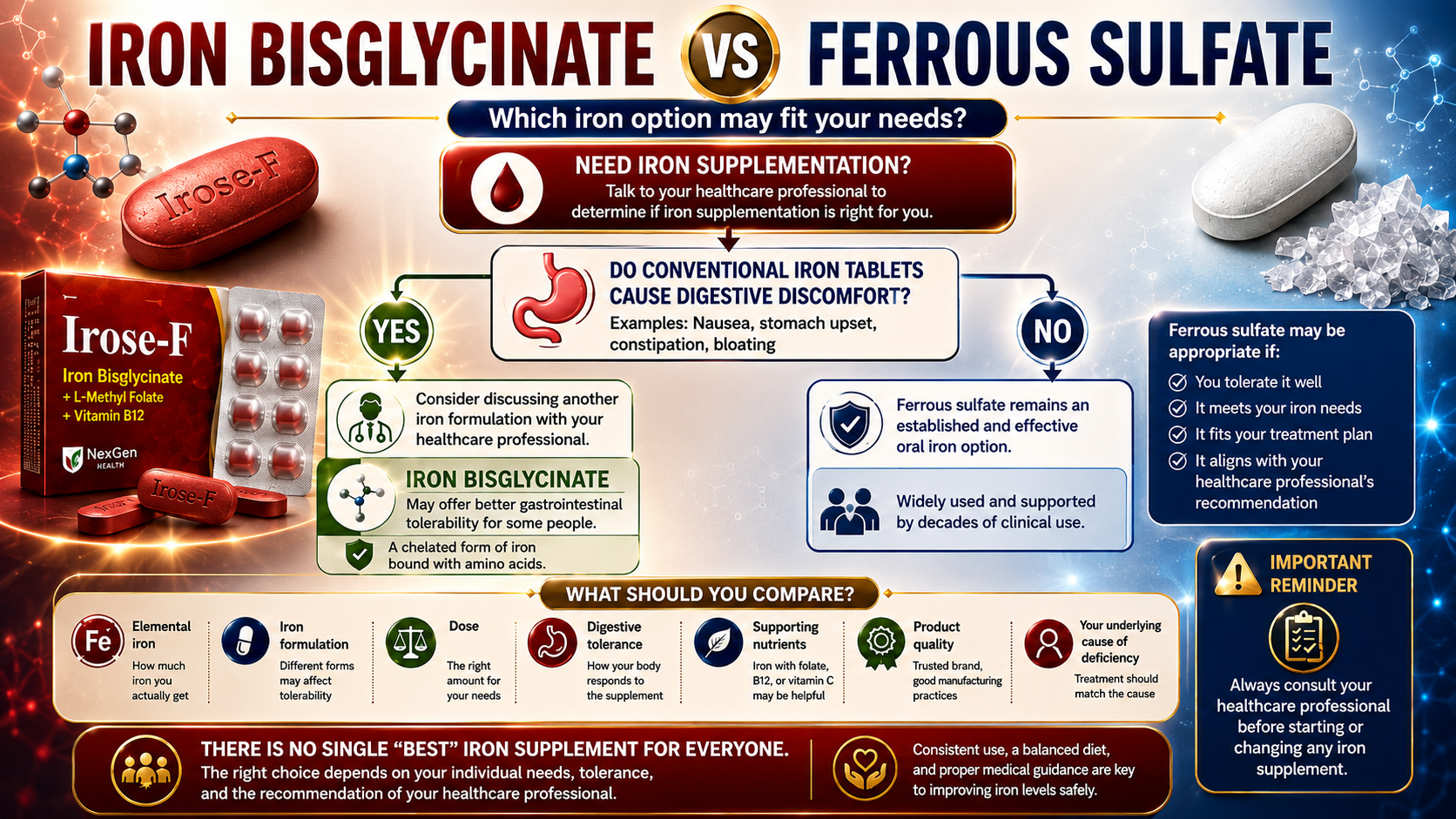
Ferrous sulfate remains an established and effective form of oral iron supplementation. However, gastrointestinal side effects can make it unsuitable for some people's daily routines.
Iron bisglycinate offers another option with encouraging evidence for effectiveness and tolerability. Research suggests it can support hemoglobin while potentially reducing gastrointestinal adverse events.
For anyone searching for an iron supplement without constipation in Pakistan, formulation matters. Iron bisglycinate may be worth considering when conventional iron causes digestive discomfort.
For women comparing the best iron tablet for women, consistency should remain a major consideration. The highest iron dose is not necessarily the most suitable choice.
The right formulation should match your nutritional needs, tolerance, dosage requirements, and healthcare guidance. Comparing these factors provides a more practical approach than simply choosing one iron form.
If you want combined iron, folate, and B12 nutritional support, consider the Iron Bisglycinate Anemia & Energy Pack by NexGen Health.
Remember that anemia requires proper assessment when symptoms persist or deficiency remains unexplained. Persistent low hemoglobin should never be managed through supplements alone. Professional evaluation can help identify blood loss, nutritional deficiencies, or underlying medical conditions.
Medical disclaimer: This article provides general educational information and does not replace professional medical advice. Always seek appropriate medical guidance when anemia symptoms persist or laboratory results remain abnormal.