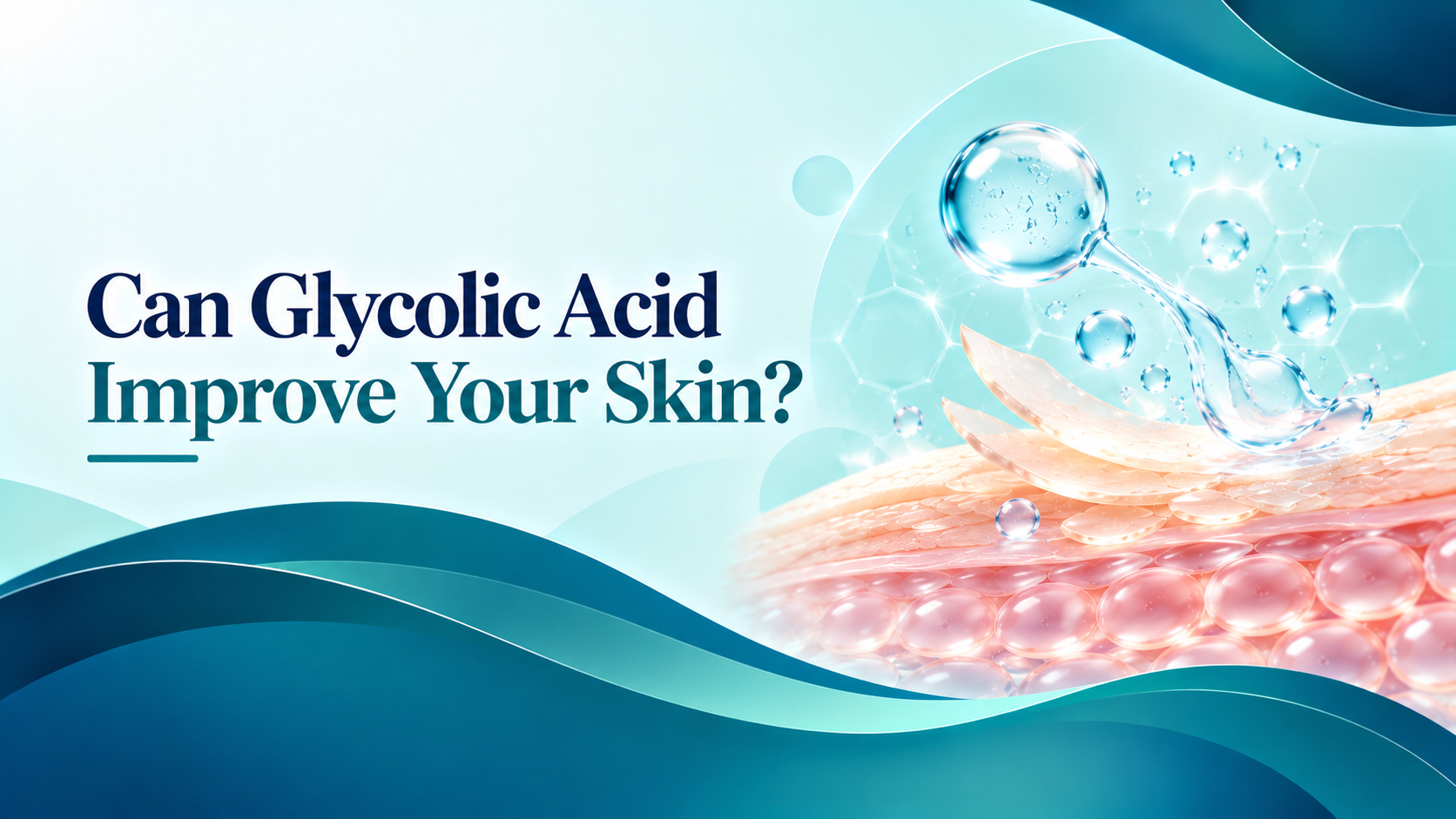
Glycolic acid is a water-soluble alpha hydroxy acid (AHA) that helps remove dead skin cells from the skin's surface. It can improve rough texture, brighten dull-looking skin, and gradually reduce certain dark spots. These glycolic acid benefits depend on your skin type, product strength, and how consistently you use it. Start slowly, moisturize regularly, and apply sunscreen daily to minimize irritation and protect your results.
Dull skin, uneven texture, and stubborn dark spots can make even a consistent skincare routine feel ineffective. While facial scrubs may provide temporary smoothness, aggressive scrubbing can irritate the skin and worsen existing pigmentation.
Chemical exfoliation offers another way to remove dead skin cells without physical friction. Glycolic acid is one of the most widely studied ingredients used for this purpose.
Understanding Chemical Exfoliation: How Alpha Hydroxy Acids Work
Your skin naturally sheds dead cells as new ones develop. However, aging and changes in the skin's renewal process can contribute to surface buildup, leaving skin looking dull or uneven. Chemical exfoliants help loosen these accumulated cells, encouraging a smoother-looking surface without mechanical scrubbing.
What Is Glycolic Acid and Why Does Molecule Size Matter?
Glycolic acid belongs to the alpha hydroxy acid family and has the smallest molecular structure among commonly used AHAs. Its small size allows it to penetrate the skin relatively efficiently. However, penetration also depends on the product's concentration, pH, and formulation.
Glycolic acid helps weaken the connections between dead skin cells in the outermost skin layer. This encourages their removal and can reveal a smoother, brighter-looking complexion.
Chemical Exfoliation vs Physical Scrubs: Protecting Melanin-Rich Skin
Understanding chemical exfoliation vs physical scrub methods is particularly important for people prone to hyperpigmentation. Aggressive scrubbing can cause irritation, especially when abrasive particles are applied with excessive pressure. In melanin-rich skin, inflammation may contribute to post-inflammatory hyperpigmentation (PIH).
Chemical exfoliants work differently by loosening dead surface cells rather than physically rubbing them away. However, chemical exfoliation is not automatically safer. Strong formulations or excessive use can also cause redness, irritation, and pigmentation problems. The best approach is gentle exfoliation suited to your skin's tolerance.
Core AHA Benefits for Skin: Texture, Hyperpigmentation, and Radiance
When used appropriately, glycolic acid may provide several skincare benefits:
- Smoother Skin Texture: Helps remove accumulated dead cells that contribute to roughness.
- Reduced Post-Acne Marks: May gradually improve some superficial dark spots associated with previous breakouts.
- Brighter-Looking Skin: Encourages surface exfoliation, helping reduce a dull appearance.
- Improved Surface Smoothness: Can make rough areas feel softer with consistent use.
Results vary depending on skin type, pigmentation depth, product formulation, and frequency of application.
Comparing Exfoliating Acids: Glycolic Acid vs Other AHAs and BHAs
Choosing an exfoliating acid depends on your skin concerns, sensitivity, and experience with active ingredients. Although glycolic acid is popular, it is not necessarily the best choice for everyone.
| Exfoliating Acid | Acid Family | Main Characteristics | Common Uses |
|---|---|---|---|
| Glycolic Acid (7%) | AHA, water-soluble | Small molecular size; effective surface exfoliation | Dullness, uneven texture, some dark spots |
| Lactic Acid (5–10%) | AHA, water-soluble | Exfoliating and humectant properties | Dryness, dullness, uneven texture |
| Salicylic Acid (2%) | BHA, oil-soluble | Helps exfoliate within oil-rich pores | Blackheads, whiteheads, oily and acne-prone skin |
These concentrations are common examples, not directly equivalent strengths. Actual effects depend on formulation and skin tolerance.
Glycolic Acid vs Lactic and Mandelic Acid
Glycolic acid is commonly chosen for uneven texture and dull-looking skin. Its relatively small molecular size contributes to its exfoliating properties. Lactic acid offers another option, particularly for people concerned about dryness. Alongside exfoliation, it has moisture-attracting properties.
Mandelic acid has a larger molecular structure and is often considered a gentler alternative. However, even milder exfoliating acids can irritate sensitive skin. If you are new to chemical exfoliation, choose a suitable formulation and introduce it gradually.
Glycolic Acid (AHA) vs Salicylic Acid (BHA)
The main difference between these acids involves their solubility and typical uses. Glycolic acid is water-soluble and primarily supports surface exfoliation. Salicylic acid is oil-soluble, allowing it to work within oil-rich pores.
For blackheads, whiteheads, and oily skin, salicylic acid may be more suitable.
How to Safely Use Glycolic Acid in Your Weekly Routine
Introducing glycolic acid into your skincare routine does not require complicated steps. The most important factors are choosing an appropriate formulation, monitoring your skin's response, and avoiding excessive exfoliation.
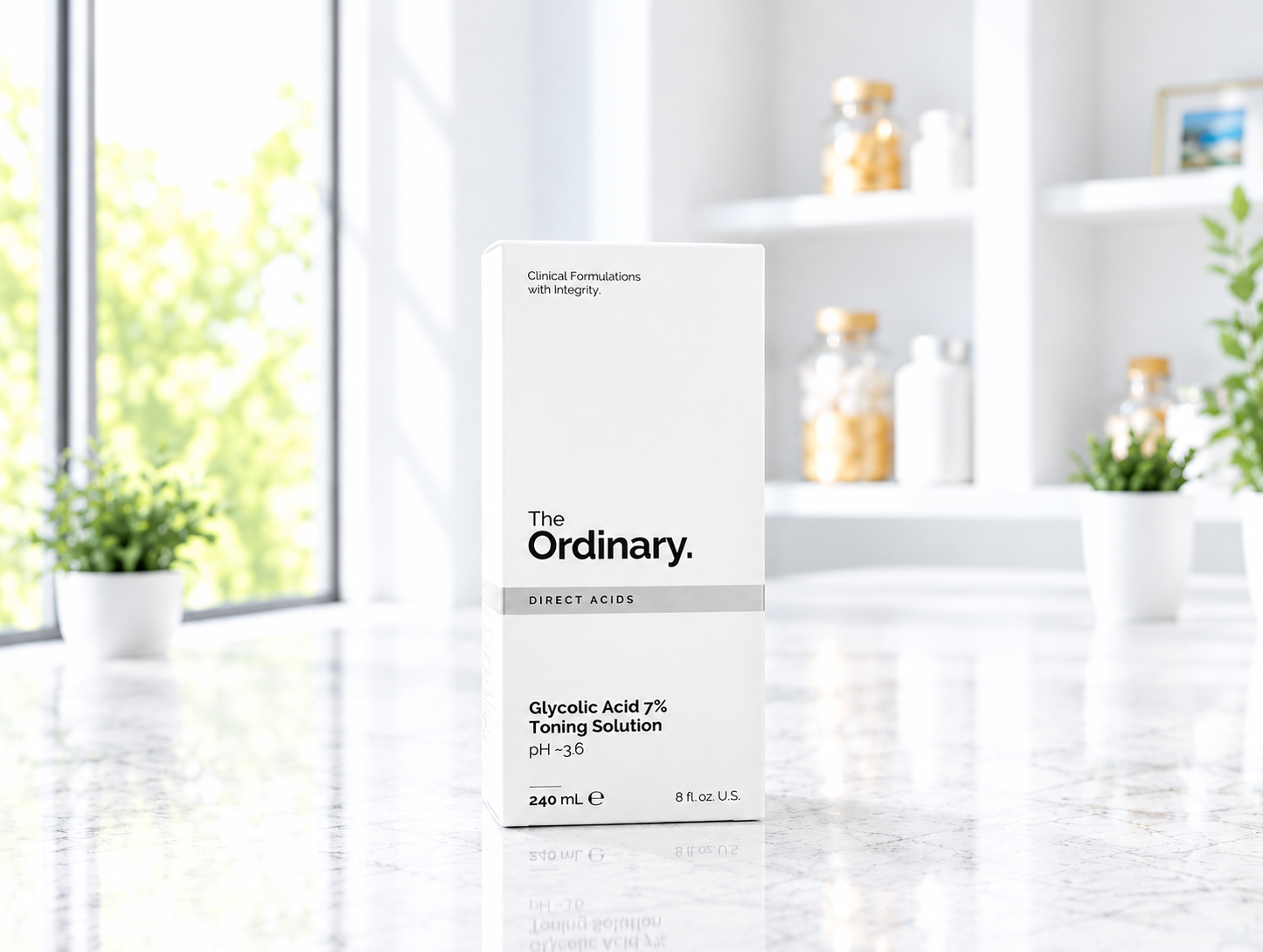
The Ordinary Glycolic Acid 7% Exfoliating Toner
Introducing glycolic acid into your skincare routine does not require complicated steps. The most important factors are choosing an appropriate formulation, monitoring your skin's response, and avoiding excessive exfoliation.
Frequency Rules: Why Less Is More for Pakistani Skin
Beginners should avoid treating glycolic acid like an ordinary daily hydrating toner. A 7% glycolic acid formulation may cause irritation when introduced too frequently, particularly on sensitive or compromised skin.
Start with one evening per week, following the product's directions. If your skin tolerates it comfortably, you may gradually increase the frequency to twice weekly.
Some people tolerate more frequent use, but additional applications are not necessarily more effective. Always follow the manufacturer's instructions and reduce frequency if irritation develops.
Evening Application Steps: Cleanse, Apply, and Hydrate
A simple evening routine can help minimize unnecessary irritation. Begin with a gentle cleanser that removes surface impurities without leaving your skin feeling tight.
Step 1: Cleanse and Dry
Wash your face gently and pat it dry. Applying exfoliating acids to dry skin may help reduce unnecessary stinging.
Step 2: Apply the Glycolic Acid
Follow the product's application instructions. For a toner, apply a small amount using a cotton pad as directed. Avoid the eye area, lips, irritated skin, and broken skin.
Step 3: Apply Moisturizer
Follow with a gentle, fragrance-free moisturizer to support hydration and skin comfort. A moisturizer containing ceramides can help support the skin barrier, although ceramides are not essential for every routine.
The Non-Negotiable Rule: Daily Sunscreen Protection
Alpha hydroxy acids can increase the skin's sensitivity to ultraviolet radiation, making sun protection especially important. In Pakistan, strong sunlight and regular outdoor exposure can contribute to pigmentation concerns.
Apply a broad-spectrum sunscreen with SPF 30 or higher every morning. SPF 50 is a practical option, particularly during prolonged outdoor exposure. Reapply approximately every two hours when outdoors, especially after sweating or washing your face.
Protective clothing and shade provide additional protection.
Common Exfoliation Mistakes and Ingredient Conflicts
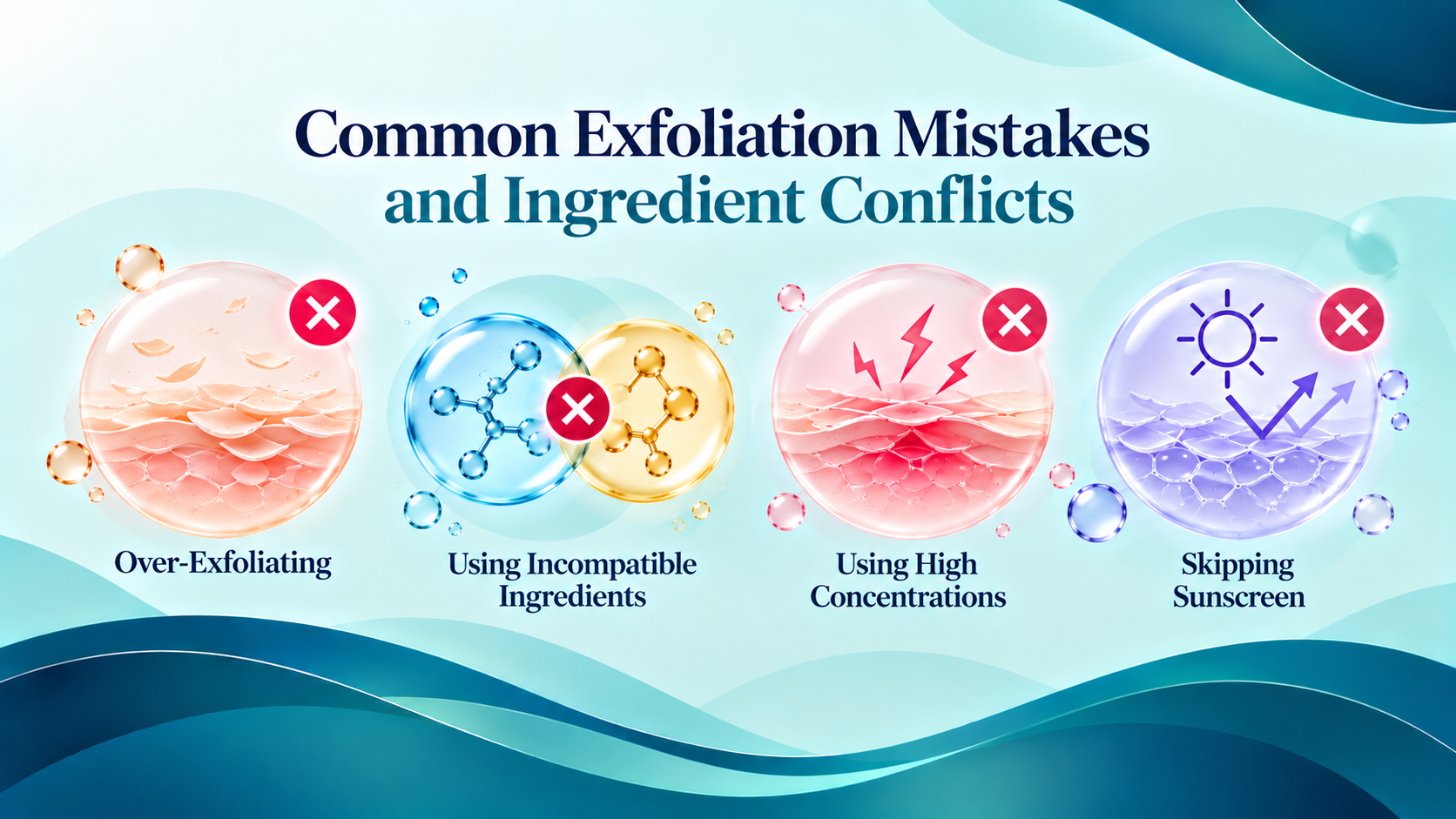
Glycolic acid can be useful, but combining multiple active ingredients without considering their effects may increase irritation. Understanding ingredient compatibility is especially important when building a routine around chemical exfoliation.
Avoid Combining Too Many Strong Actives
Using glycolic acid alongside retinol, salicylic acid, or other exfoliating treatments may increase dryness and irritation. Strong or low-pH vitamin C formulations may also be difficult for some people to tolerate alongside exfoliating acids.
These ingredients are not universally incompatible, but beginners should avoid introducing several strong treatments simultaneously. Consider using potentially irritating actives on alternate evenings.
Signs You Have Over-Exfoliated and How to Support Your Skin Barrier
Excessive exfoliation may disrupt the skin barrier and cause uncomfortable symptoms.
Common warning signs include:
- Persistent redness or irritation
- Tightness and unusual dryness
- Burning or stinging after applying moisturizer
- Flaking, peeling, or increased sensitivity
If these symptoms develop, stop using glycolic acid and other potentially irritating active ingredients. Focus on gentle cleansing, moisturizing, and daily sun protection while your skin recovers.
Recovery time varies, so avoid restarting exfoliation until your skin feels comfortable again. If symptoms are severe, persistent, or worsening, consult a dermatologist.
Who Should Avoid Glycolic Acid?
Glycolic acid may not be suitable for every skin condition. Avoid applying it to broken, sunburned, or visibly irritated skin.
People with eczema, rosacea, highly reactive skin, or an impaired skin barrier should seek professional guidance before introducing exfoliating acids. If you experience persistent pigmentation or active inflammatory skin conditions, a dermatologist can help identify suitable treatment options.
Glycolic acid can help improve uneven texture and dull-looking skin, but moderation is essential. Start with once-weekly use, increase only if tolerated, and maintain a gentle moisturizing routine. Daily sunscreen helps protect your skin and reduce the risk of worsening pigmentation.
Final Thoughts
Glycolic acid can be a useful addition to a skincare routine when used carefully. Its exfoliating properties may improve dullness, rough texture, and certain superficial dark spots over time.
However, stronger products and frequent applications do not automatically produce better results. Start gradually, monitor your skin's response, and prioritize moisturizing and sun protection.
At NexGen Health, we encourage informed skincare choices based on individual skin concerns rather than complicated routines. The goal is not to exfoliate as often as possible, but to find a routine your skin can comfortably tolerate.
This article is intended for general educational purposes and does not replace professional medical or dermatological advice. Patch-test new skincare products according to their instructions before regular use. Discontinue use if significant irritation occurs and consult a qualified healthcare professional when necessary. Individual results vary depending on skin type, product formulation, and other factors.