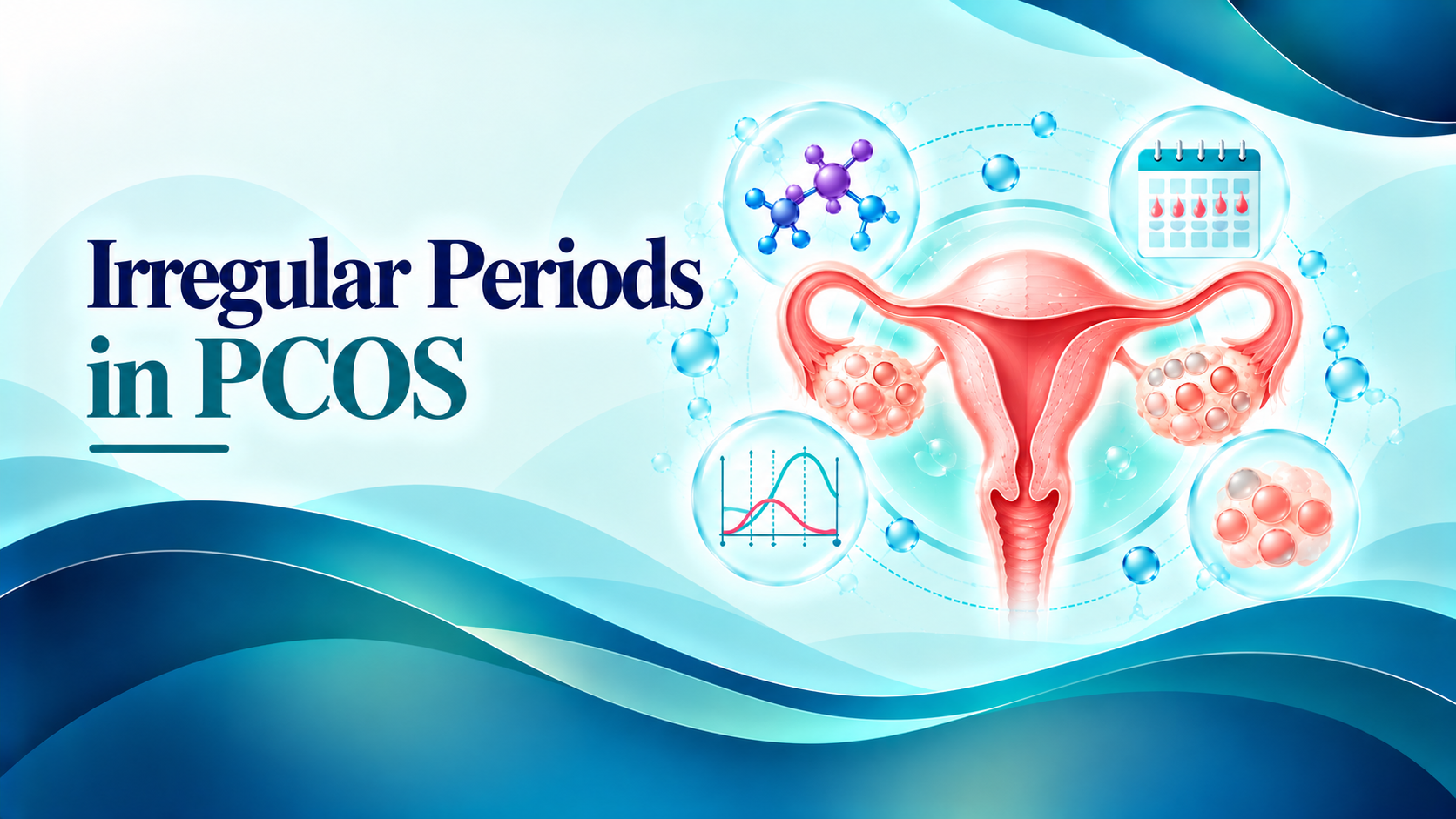
PCOS can interrupt the body's usual ovulation process, causing periods to arrive late or disappear for months. Higher androgen levels and insulin resistance may make it harder for an egg to mature and leave the ovary. When ovulation does not happen, progesterone production changes, affecting how the uterine lining develops and sheds. Managing these changes may involve medical treatment, everyday health habits, and regular monitoring.
Missing a period occasionally may not seem unusual. But when cycle dates keep changing, it becomes harder to know what to expect.
For some women, Polycystic Ovary Syndrome (PCOS) is behind these changes. Your period menstrual cycle follows hormonal signals traveling between the brain, ovaries, and uterus. PCOS can interfere with these signals, making ovulation less predictable. However, not every missed period is related to PCOS. Understanding what happens during the cycle can help you recognize when something needs attention.
Understanding the Normal Menstrual Cycle
A menstrual cycle begins on the first day of bleeding and ends just before the next period starts. Throughout this time, hormones prepare the ovaries and uterus for a possible pregnancy.
What Happens During a Healthy Cycle?
For most adults, a normal cycle of period falls between 21 and 35 days.
The body moves through four main stages:
- Menstruation: The uterine lining leaves the body through menstrual bleeding.
- Follicular Phase: Hormonal signals encourage an egg to develop inside an ovarian follicle.
- Ovulation: The ovary releases an egg that may be fertilized.
- Luteal Phase: Progesterone helps maintain the uterine lining after ovulation.
When pregnancy does not occur, hormone levels change, and bleeding begins again. Cycle lengths can vary slightly without indicating a health problem.
What If an Egg Is Not Released?
Sometimes, the ovaries do not release an egg during a cycle. This is known as anovulation.
Without ovulation, the body usually does not produce its typical post-ovulation rise in progesterone. Meanwhile, estrogen may continue affecting the uterine lining. The lining can eventually shed at an unexpected time, resulting in spotting, delayed bleeding, or a heavier flow. This bleeding does not necessarily mean ovulation occurred.
How PCOS Changes Your Menstrual Cycle
PCOS can affect the hormonal messages that help eggs develop and trigger ovulation. When those signals become disrupted, periods may no longer follow a familiar schedule.
The Connection Between Insulin and Androgens
Insulin allows your body's cells to take in sugar from the blood and use it for energy. With insulin resistance, cells respond less efficiently, so the body may release additional insulin. In some women with PCOS, higher insulin levels encourage increased androgen production.
Androgens are hormones that include testosterone. Excess amounts can affect egg development and contribute to acne or facial hair growth. These hormonal changes may also explain why some women experience an irregular period pattern together with acne or unwanted facial hair. Still, insulin resistance does not affect everyone with PCOS.
Why Some Women Miss Several Periods
Normally, one follicle develops enough to release an egg. With PCOS, follicles may start growing but fail to complete the process consistently. As a result, ovulation may happen less frequently. Some women notice longer gaps between periods. Others may experience several months without bleeding.
The pattern differs from person to person.
Do LH and FSH Affect Ovulation?
Two hormones, LH (Luteinizing Hormone) and FSH (Follicle-Stimulating Hormone), help control how follicles develop and when an egg is released. Their activity may change in women with PCOS, although these changes are not identical for everyone. An unusual LH-to-FSH ratio alone cannot confirm PCOS. A regular period menstrual cycle relies on several hormones working together, not one particular test result.
Signs of Irregular Periods and When to Seek Help
Occasional changes in cycle timing are common. Repeated or significant changes deserve closer attention.
Menstrual Changes Worth Tracking
You may notice:
- •More than 35 days between periods.
- •Fewer than eight periods throughout the year.
- •Three months passing without bleeding.
- •Spotting between expected periods.
- •Bleeding that lasts longer or feels heavier than usual.
If your irregular pattern continues, consider booking a medical appointment. Conditions involving the thyroid, pregnancy, prolactin levels, or significant weight changes may produce similar symptoms.
Understanding Period Pain and Heavy Bleeding
Period cramps develop as the uterus tightens to shed its inner lining. Substances known as prostaglandins help trigger these movements, sometimes making them uncomfortable. PCOS does not automatically make periods painful.
A suitable treatment for period pain may involve:
- •Placing gentle heat over the lower abdomen.
- •Walking or stretching if movement feels comfortable.
- •Taking an appropriate pain reliever when safe for you.
- •Getting medical advice if discomfort becomes severe.
Ongoing pelvic pain may have another cause, such as endometriosis, and should be assessed.
How Is PCOS Diagnosed?
For adults, doctors generally look for at least two of three findings after ruling out other causes:
- Irregular or absent ovulation.
- Signs or blood-test evidence of increased androgens.
- Polycystic ovarian appearance on ultrasound or appropriately assessed AMH levels.
Diagnosis follows different criteria during adolescence. A doctor may request additional tests to investigate other explanations for missed periods. If you have not had a period for three months, arrange an assessment. Take a pregnancy test if pregnancy is possible.
Seek urgent care for extremely heavy bleeding, fainting, or intense pelvic pain.
Ways to Manage Irregular Periods with PCOS
PCOS management is not the same for everyone. The right approach varies depending on your health concerns, the symptoms you experience, and your plans for pregnancy.
Build Sustainable Eating and Activity Habits
Eating well with PCOS does not require a complicated meal plan. Try building meals around vegetables, protein-rich foods, and sources of fiber. Choose a balanced eating routine that suits your preferences and is practical to follow over time.
Staying active can make it easier for your body to respond to insulin. Activities such as walking, cycling, or resistance exercises are useful options. Some women also notice changes in their menstrual patterns, although results differ.
Make Sleep and Stress Management a Priority
Poor sleep and persistent stress can make existing health concerns harder to manage. Try maintaining consistent sleep hours and including activities that help you relax. These habits support general well-being, although they do not replace treatment for ovulation difficulties.
What About Inositol Supplements?
Ovarise Tablet (PCOS Support Supplement)
Ovarise Tablet combines myo-inositol with L-methylfolate, zinc, and chromium picolinate, providing nutritional support for women managing PCOS as part of a balanced health and wellness routine.

Inositol is a substance the body uses in several cellular processes, including insulin-related signaling. Researchers have studied whether supplements containing inositol may help women with PCOS. Some studies report changes in metabolic measurements, but evidence for improved ovulation and fertility remains uncertain.
Current international PCOS guidance does not establish one preferred inositol dose or combination. Speak with a healthcare professional before adding supplements to your routine.
Learn more in our guide to Myo-Inositol and D-Chiro-Inositol for PCOS.
Medical Options for Cycle Regulation
Sometimes, lifestyle changes alone are not enough to manage irregular bleeding. Depending on individual needs, doctors may prescribe hormonal contraception or periodic progestogen treatment. These approaches can help manage bleeding and reduce risks associated with prolonged exposure of the uterine lining to estrogen without sufficient progesterone. Other treatments may be considered when metabolic concerns or fertility difficulties need attention.
When Menstrual Cramps Need More Attention
Choosing a treatment for period pain starts with understanding the symptoms. Heat and suitable pain medicines may provide relief from ordinary cramps. However, severe discomfort, prolonged bleeding, or pain that disrupts everyday activities needs medical evaluation.
Not every menstrual symptom should be attributed to PCOS.
PCOS may interfere with ovulation through changes in insulin activity and reproductive hormones. This can lead to missed periods or unexpected bleeding. A normal cycle of period can vary slightly, but ongoing irregularity should not be ignored. Healthy routines and medical treatment can help manage symptoms, while supplements should not replace professional care.
Final Thoughts: Understanding Your Cycle
Learning how your period menstrual cycle works can help you identify changes that deserve attention. PCOS can make periods unpredictable, but treatment options are available. Tracking bleeding dates, discussing persistent symptoms with a doctor, and developing manageable health habits are useful starting points.
At NexGen Health, we share accessible information about women's hormonal health and nutritional support. The aim is to understand your body's needs and make informed decisions about your care.
This article is for educational purposes and is not a substitute for medical advice. Missed periods and unusual bleeding can occur for reasons unrelated to PCOS. Consult a qualified gynecologist about persistent menstrual changes, severe pain, prolonged absence of bleeding, or unusually heavy periods.