Vitamin D Deficiency Symptoms: Causes, Testing, and the Role of D3 and K2
Common vitamin d deficiency symptoms include muscle weakness, bone discomfort, and sometimes fatigue. However, many people have no noticeable symptoms. Vitamin D helps the body absorb calcium and maintain healthy bones, while vitamin K2 supports proteins involved in bone metabolism. Blood testing may be recommended when symptoms or risk factors suggest deficiency.
Do you often feel tired, experience unexplained muscle weakness, or notice persistent bone aches? Although these symptoms can have several causes, low vitamin D is one possibility worth investigating. Even in sunny countries like Pakistan, limited outdoor activity, clothing coverage, and dietary habits can contribute to inadequate vitamin D levels.
Understanding the warning signs and the roles of vitamins D3 and K2 can help you make informed decisions about your health.
What Is Vitamin D and Why Is It Important?
Vitamin D is a fat-soluble nutrient that helps your body absorb calcium and phosphorus, both essential for healthy bones and teeth. It also contributes to normal muscle function and immune regulation. Your body produces vitamin D when ultraviolet B (UVB) sunlight reaches your skin. Smaller amounts come from food and supplements.
Vitamin D comes in two main forms:
- Vitamin D2: Found in certain mushrooms and fortified foods.
- Vitamin D3: Produced in the skin and found in animal-derived foods and many supplements.
Both can improve vitamin D levels, although D3 generally raises and maintains blood levels more effectively.
Common Vitamin D Deficiency Symptoms
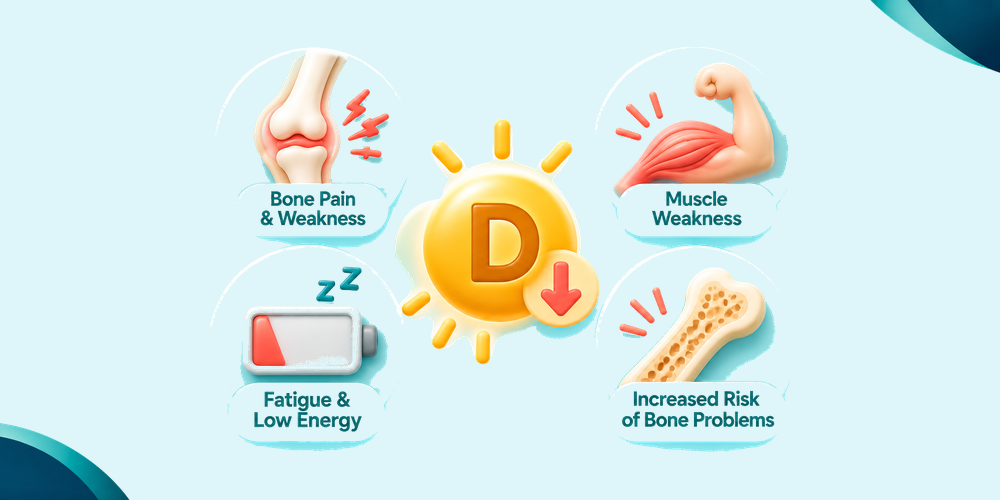
The effects of low vitamin D vary depending on the severity and duration of deficiency.
Bone Pain and Weakness
Vitamin D helps maintain proper bone mineralization. Severe or prolonged deficiency may cause osteomalacia in adults, a condition in which bones become inadequately mineralized. This can lead to deep bone pain, tenderness, and difficulty moving comfortably.
Muscle Weakness
Low vitamin D may contribute to muscle weakness, particularly when deficiency is significant. Some people experience difficulty climbing stairs, rising from a chair, or performing everyday physical activities.
Fatigue and Low Energy
Fatigue is sometimes associated with low vitamin D, but it is not a reliable indicator on its own. Poor sleep, anemia, thyroid disorders, and other medical conditions can cause similar symptoms.
Increased Risk of Bone Problems
Long-term deficiency can weaken bone mineralization. In children, severe deficiency may cause rickets, while adults may develop osteomalacia. Recognizing lack of vitamin d symptoms is useful, but testing and clinical evaluation are necessary to establish the cause.
What Causes Vitamin D Deficiency?
Vitamin d deficiency develops when the body receives, produces, or absorbs insufficient vitamin D.
Common contributing factors include:
- Limited sunlight: Spending most of the day indoors reduces vitamin D production.
- Skin pigmentation: Higher melanin levels reduce the efficiency of vitamin D synthesis from sunlight.
- Clothing coverage: Covering most of the skin limits UVB exposure.
- Low dietary intake: Few foods naturally contain substantial vitamin D.
- Medical conditions: Certain digestive, liver, and kidney disorders can affect vitamin D absorption or metabolism.
Older adults and people taking certain medications may also have an increased risk.
Not really! Window glass blocks most UVB rays, which your skin needs to produce vitamin D. So, even if sunlight fills your room, sitting beside a sunny window won't help your body make much vitamin D.
Vitamin D3 K2 Benefits: How Do These Nutrients Work Together?
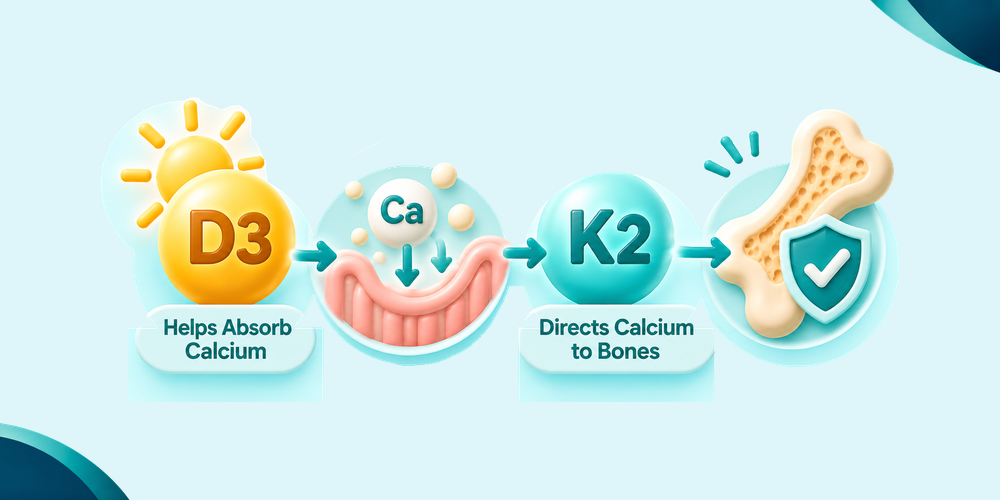
Vitamin D3 and vitamin K2 play different but related roles in calcium metabolism. Understanding their functions helps explain why they are sometimes included in combined supplements.
| Nutrient | Main Role |
|---|---|
| Vitamin D3 | Helps absorb calcium and phosphorus from food |
| Vitamin K2 | Activates proteins involved in bone metabolism and normal blood clotting |
| D3 + K2 | Supports complementary biological functions, although additional benefits from combining them remain uncertain |
Vitamin D3: Supporting Calcium Absorption
Vitamin D3 helps the intestines absorb calcium, making it available for normal bone mineralization. Without sufficient vitamin D, calcium absorption may decrease, potentially affecting bone strength over time.
Vitamin K2: Supporting Bone-Related Proteins
Vitamin K2 helps activate proteins such as osteocalcin, which participates in bone mineralization. It also activates matrix Gla protein, which helps regulate mineral deposition in tissues. However, these biological functions do not establish that K2 supplementation prevents cardiovascular disease.
Does Vitamin K2 Prevent Calcium Buildup in Arteries?
Research is investigating whether vitamin K2 influences vascular calcification. Although laboratory and clinical findings are promising in some areas, evidence remains insufficient to conclude that K2 supplements reliably prevent arterial calcium deposits. Similarly, taking vitamin D3 at appropriate doses does not automatically cause calcium to accumulate in blood vessels.
The proposed vitamin d3 k2 benefits should therefore be understood without assuming that everyone needs both supplements.
How Is Vitamin D Deficiency Diagnosed?
A blood test measuring 25-hydroxyvitamin D [25(OH)D] is used to assess vitamin D status. Testing may be recommended when symptoms, bone disorders, or other risk factors suggest deficiency.
Understanding Vitamin D Blood Test Results
| Blood Level | General Interpretation |
|---|---|
| Below 12 ng/mL | Increased risk of deficiency |
| 12–19 ng/mL | May be inadequate for some people |
| 20 ng/mL or higher | Generally adequate for most healthy individuals |
| Above 50 ng/mL | May be associated with potential adverse effects |
These values are general reference points. Clinical guidelines and laboratory interpretations can differ. Routine screening is not necessary for every healthy adult. If you experience persistent lack of vitamin d symptoms, consult a healthcare professional to determine whether testing is appropriate.
How Can You Improve Your Vitamin D Levels?

Maintaining adequate vitamin D may involve dietary changes, sensible sunlight exposure, and supplements when needed.
Eat Vitamin D-Rich Foods
Useful sources include fatty fish, egg yolks, fortified milk, and certain UV-exposed mushrooms. Food contributes to vitamin D intake but may not be sufficient to correct an established deficiency.
Get Sensible Sun Exposure
Sunlight supports natural vitamin D production, but the amount produced depends on skin pigmentation, season, clothing, and location. Avoid sunburn and excessive unprotected exposure.
Consider Supplements When Appropriate
Vitamin D3 supplements can help raise low vitamin D levels. The correct dose depends on age, medical history, baseline vitamin D status, and the reason for supplementation. High-dose preparations should only be used under medical supervision.
Support Strong Bones & Muscle Health
A high-strength vitamin D3 and vitamin E formulation designed to support calcium absorption, bone health, and normal muscle function when prescribed for vitamin D deficiency.

Take Vitamin D With Food
Vitamin D is fat-soluble, so taking supplements with a meal containing some dietary fat may improve absorption. Follow the instructions provided by your healthcare professional or on the product label.
Can Too Much Vitamin D Be Harmful?
Yes. Excessive supplementation can increase calcium levels in the blood, potentially causing nausea, constipation, weakness, and kidney problems. For most adults, the established tolerable upper intake level is 4,000 IU daily, although doctors may prescribe higher doses temporarily for specific conditions.
Vitamin K2 does not protect against vitamin D toxicity. People taking warfarin or other vitamin K-antagonist medications should consult their doctor before using K2 supplements.
Vitamin D is essential for calcium absorption, bone health, and normal muscle function. Deficiency may cause bone pain and weakness, although symptoms are not always present. Vitamin K2 supports bone-related proteins, but combining D3 and K2 is not necessary for everyone. Appropriate testing and individualized supplementation are more important than taking unnecessarily high doses.
Final Thoughts
Maintaining healthy vitamin D levels supports long-term bone and muscle health. Recognizing vitamin d deficiency symptoms can encourage timely medical evaluation, but symptoms alone cannot confirm deficiency. Balanced nutrition, sensible sunlight exposure, and appropriate supplementation can help maintain adequate levels.
For people with confirmed vitamin d deficiency, treatment should be based on individual medical needs. Explore more nutritional guidance at NexGen Health.
This article is for educational purposes and does not replace professional medical advice. Consult a qualified healthcare professional before starting high-dose vitamin D or vitamin K supplements, particularly if you have kidney disease, elevated blood calcium, or take medications that interact with these nutrients.