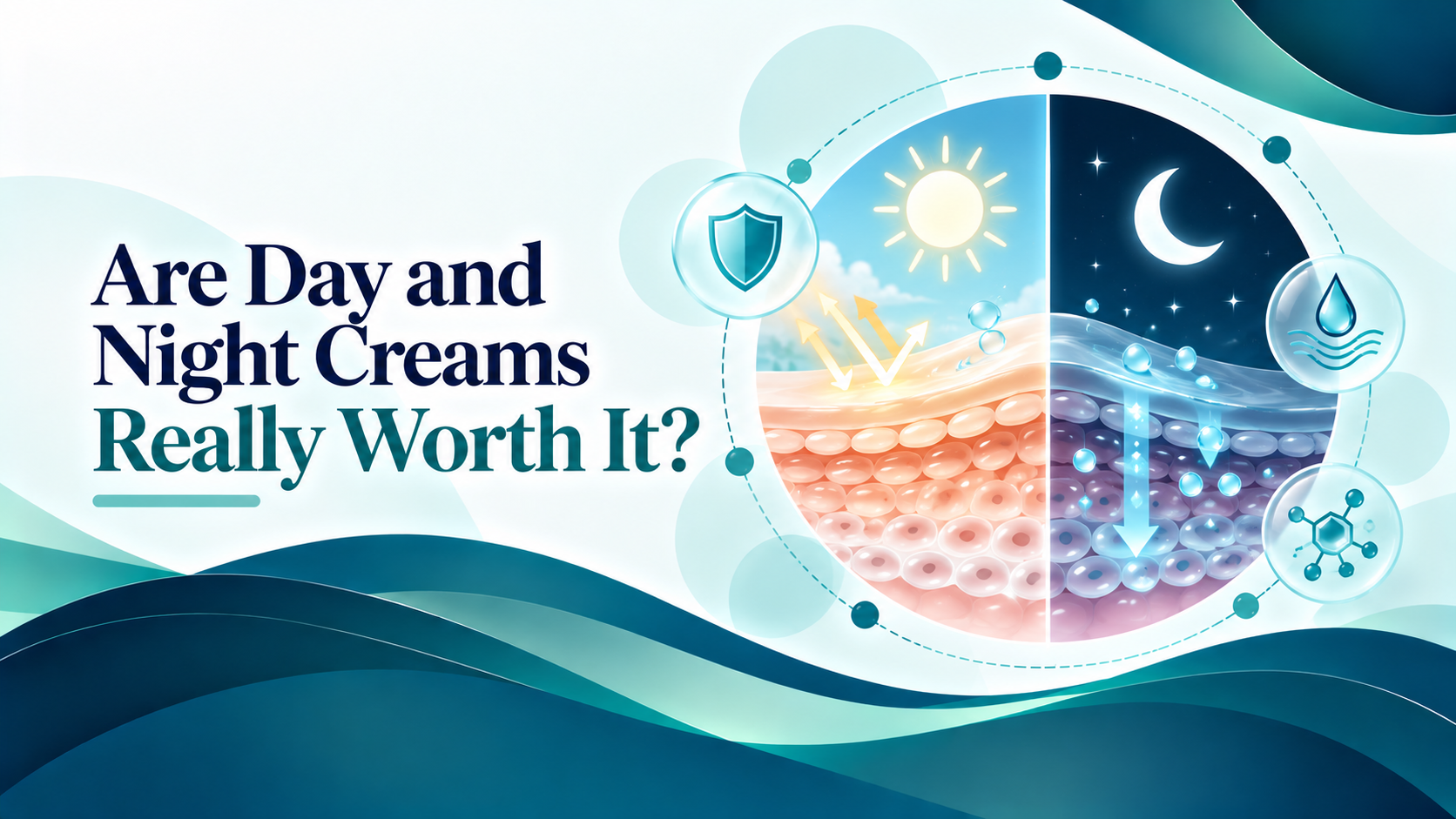
Not necessarily. Your skin needs hydration throughout the day and night, but one suitable moisturizer can often meet both needs. Day creams are commonly designed for comfortable wear beneath sunscreen, while night creams may have richer textures. The right choice depends on your skin type, ingredients, and environment. Consistent moisturizing and daytime sun protection matter more than using two differently labeled products.
Skincare shelves are filled with separate creams for morning and evening use. One promises daytime protection, while another claims to restore your skin overnight.
But does your skin really need two products?
Your skin follows natural biological rhythms, and its moisture needs can change with your environment. However, these changes do not automatically make separate creams necessary. Understanding the day vs night cream difference can help you choose products based on how they work rather than their packaging.
How Your Skin's 24-Hour Biological Clock Works
Your skin is active throughout the day and night. It constantly replaces older cells, maintains its protective surface, and responds to environmental conditions. Some of these functions follow a natural timing system.
What Is the Circadian Rhythm?
The circadian rhythm is your body's internal biological clock, which follows an approximately 24-hour cycle. It helps coordinate sleep, body temperature, hormone activity, and many cellular processes. Light exposure is an important signal that helps keep this clock synchronized. Your skin also contains biological clocks that influence how certain cellular functions change throughout the day.
Researchers studying circadian rhythm skin repair examine these daily variations in skin renewal, barrier activity, and responses to environmental stress. However, your skin does not wait until bedtime to begin repairing itself. Maintenance and renewal continue throughout the day.
Does Your Skin Lose More Moisture at Night?
Your skin naturally allows small amounts of water to escape into the surrounding air. This process is called transepidermal water loss (TEWL). Research suggests that TEWL can vary across the day, although the timing and degree differ between individuals and body areas.
Water loss also depends on humidity, temperature, and the condition of your skin barrier. Therefore, waking with dry skin does not necessarily mean your skin loses the most moisture at night.
Why Your Skin Barrier Matters
The skin barrier is the protective outermost part of your skin, known as the stratum corneum. Think of it as a wall made of flattened skin cells surrounded by natural fats, including ceramides and cholesterol. This structure helps retain moisture while limiting the entry of irritants and other external substances.
When the barrier becomes disrupted, your skin may feel dry, rough, tight, or sensitive. Gentle cleansing and suitable moisturizers can support skin barrier repair by helping reduce moisture loss and replenish protective ingredients.
Day Cream vs Night Cream: What Is the Real Difference?
Although skincare brands often separate products by time of use, their formulations can overlap considerably. The practical day vs night cream difference usually comes down to texture, added ingredients, and compatibility with sunscreen or other treatments.
| Feature | Day Cream | Night Cream |
|---|---|---|
| Typical texture | Lightweight lotion, gel, or cream | Lotion, cream, or richer balm |
| Common ingredients | Glycerin, hyaluronic acid, niacinamide | Ceramides, glycerin, squalane, emollients |
| Main consideration | Comfortable hydration beneath sunscreen | Moisture retention and overnight comfort |
| SPF | Sometimes included | Usually unnecessary |
| Suitable for | Morning use, depending on formulation | Evening use, depending on formulation |
These are common product characteristics, not strict scientific rules.
How Moisturizing Ingredients Actually Work
Moisturizers usually combine three types of ingredients.
- Humectants: Ingredients such as glycerin and hyaluronic acid attract and hold water in the outer skin layers.
- Emollients: Ingredients such as squalane help soften rough skin and improve its smoothness.
- Occlusives: Ingredients such as petrolatum form a protective layer that reduces water evaporation.
Many ingredients perform more than one function. Ceramides are another important component because they help replenish lipids found naturally within the skin barrier.
A well-formulated cream may combine several of these ingredients to improve hydration and comfort.
Can One Moisturizer Work Morning and Night?
Yes. A basic moisturizer can often be used twice daily if your skin tolerates it well. For example, someone with dry skin may prefer a ceramide-containing cream after morning cleansing and again before bed.
Someone with oily skin might choose a lighter lotion for both applications. The important exception is sun protection. A regular moisturizer does not replace broad-spectrum sunscreen. Also, certain treatment ingredients, including some retinoids, may require specific application instructions.
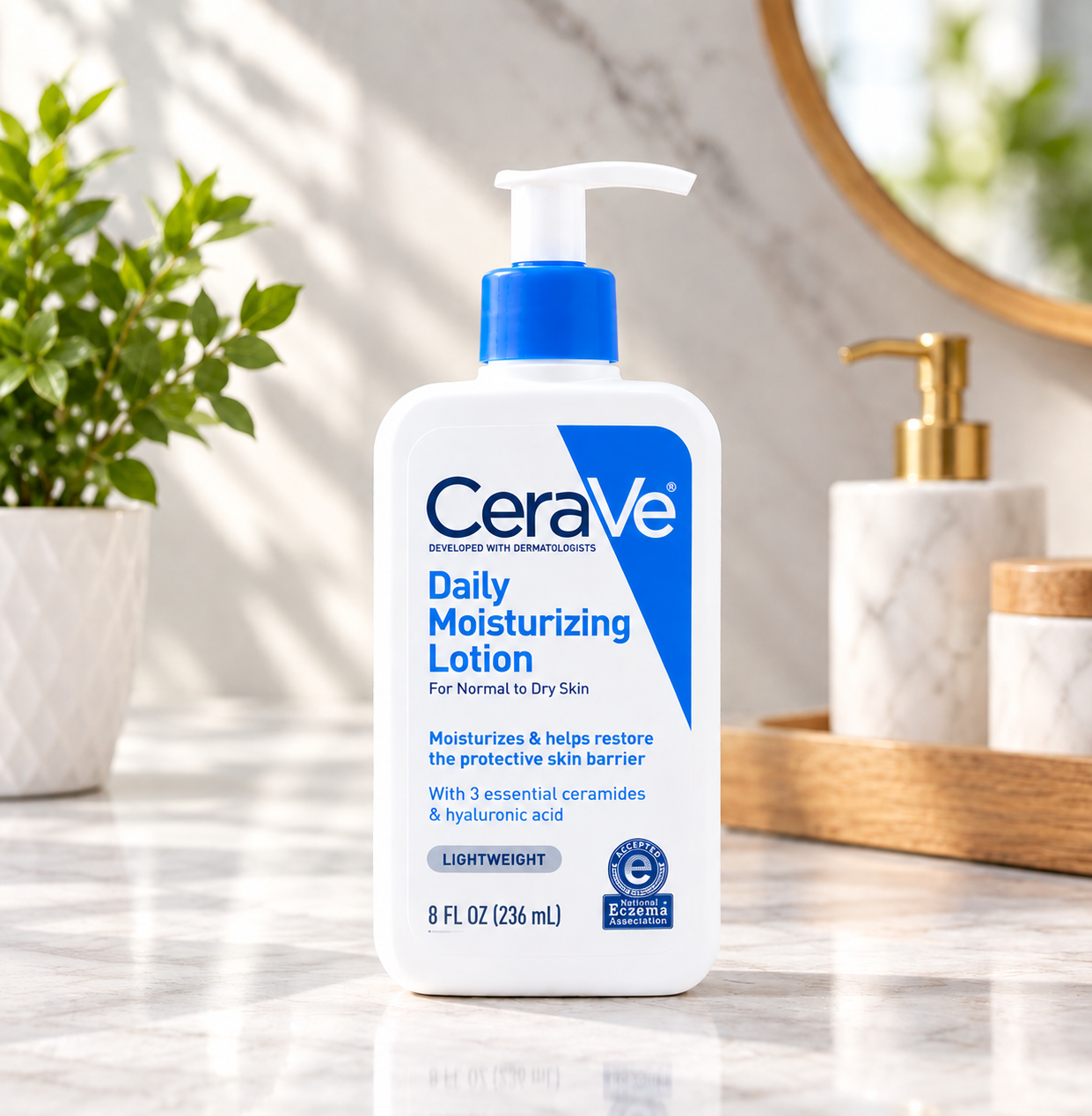
Day & Night Hydration
Keep your skin hydrated with CeraVe Daily Moisturizing Lotion. Formulated with ceramides and hyaluronic acid, this lightweight moisturizer helps support the skin barrier and is suitable for morning and evening use.
When Two Different Creams Make Sense
Separate creams may be useful when your skin prefers different textures at different times. You might choose a lighter product under sunscreen during humid weather and a richer moisturizer before sleeping. However, purchasing a matching day-and-night set is optional, not a requirement for healthy skin.
Why Skin Becomes Dry in Pakistan's Climate
Skin hydration depends on more than the moisturizer you use. Weather, indoor humidity, cleansing habits, and individual skin conditions can all contribute to dry skin causes.
Summer Humidity and Sweating
In humid cities such as Karachi, thick creams may feel uncomfortable when combined with sweat. Lightweight lotions or gels can provide hydration with a less greasy finish. Oily skin still benefits from moisturizing, particularly after cleansing.
Winter Weather and Air Conditioning
Cooler temperatures and lower humidity can increase dryness. Indoor air conditioning may also reduce humidity, depending on the environment. During these periods, a richer moisturizer may help limit moisture loss and relieve tightness. You do not necessarily need a product labeled as a night cream to achieve this.
Harsh Cleansing and Hot Water
Frequent washing, strong cleansers, and prolonged exposure to hot water can disturb the skin's natural protective surface. These habits are often overlooked among dry skin causes. Use a gentle cleanser and lukewarm water. Applying moisturizer shortly after washing may help retain moisture.
Building a Practical Morning and Evening Skincare Routine
An effective skincare routine does not require numerous products. The goal is to cleanse gently, maintain hydration, and protect your skin from avoidable damage.
Morning: Cleanse, Moisturize, and Protect
- Cleanse gently: Use a mild cleanser or rinse with water if appropriate for your skin.
- Apply moisturizer: Choose a comfortable formula containing suitable hydrating ingredients.
- Use sunscreen: Apply broad-spectrum SPF 30 or higher generously to exposed skin.
If your moisturizer contains SPF, you must still apply an adequate amount for the labeled protection. A separate sunscreen may make this easier.
For guidance on combining ingredients, explore our active skincare ingredients routine guide.
Evening: Cleanse and Replenish Moisture
- Remove buildup: Gently cleanse away makeup, sunscreen, and accumulated dirt.
- Apply treatments if needed: Follow the directions for any suitable skincare treatment.
- Moisturize: Apply a cream or lotion that keeps your skin comfortable overnight.
Double cleansing can help remove stubborn makeup or water-resistant sunscreen, but it is not essential for everyone.
What If Your Skin Barrier Is Already Damaged?
If your skin becomes unusually sensitive, flaky, or irritated, simplify your routine. Avoid introducing multiple exfoliating acids or other potentially irritating products at once. A gentle cleanser and fragrance-free moisturizer may help support skin barrier repair.
Persistent redness, cracking, or burning deserves professional assessment because conditions such as eczema may require specific treatment.
Are Night Creams Better for Skin Repair?
Night creams can improve hydration, but their effectiveness depends on their ingredients rather than the time printed on the packaging. The science of circadian rhythm skin repair helps researchers understand changes in skin biology. It does not establish that everyone needs a special night cream.
A moisturizer used consistently can help maintain hydration at either time. For effective skin barrier repair, prioritize a suitable formulation, gentle cleansing, and protection from unnecessary irritation.
Day and night creams can be useful, but separate products are not essential for everyone. Your skin follows natural biological rhythms while maintaining its protective functions throughout the day. Moisturizing ingredients help attract water, soften the skin, and reduce moisture loss. Choose products according to your skin's needs, and prioritize sunscreen during daylight hours.
Final Thoughts
The value of a moisturizer comes from its formulation and how well it suits your skin, not whether it is labeled for day or night. If one product provides comfortable hydration twice daily, there may be no reason to purchase another. If your skin feels different during humid afternoons and dry evenings, separate textures may offer practical benefits.
At NexGen Health, we encourage informed skincare choices based on ingredient knowledge, personal comfort, and consistent habits.
This article provides general educational information and does not replace professional dermatological advice. Patch-test unfamiliar skincare products before regular use. Discontinue products that cause significant irritation, and consult a qualified dermatologist for persistent dryness, rashes, or skin discomfort. Individual results may vary.