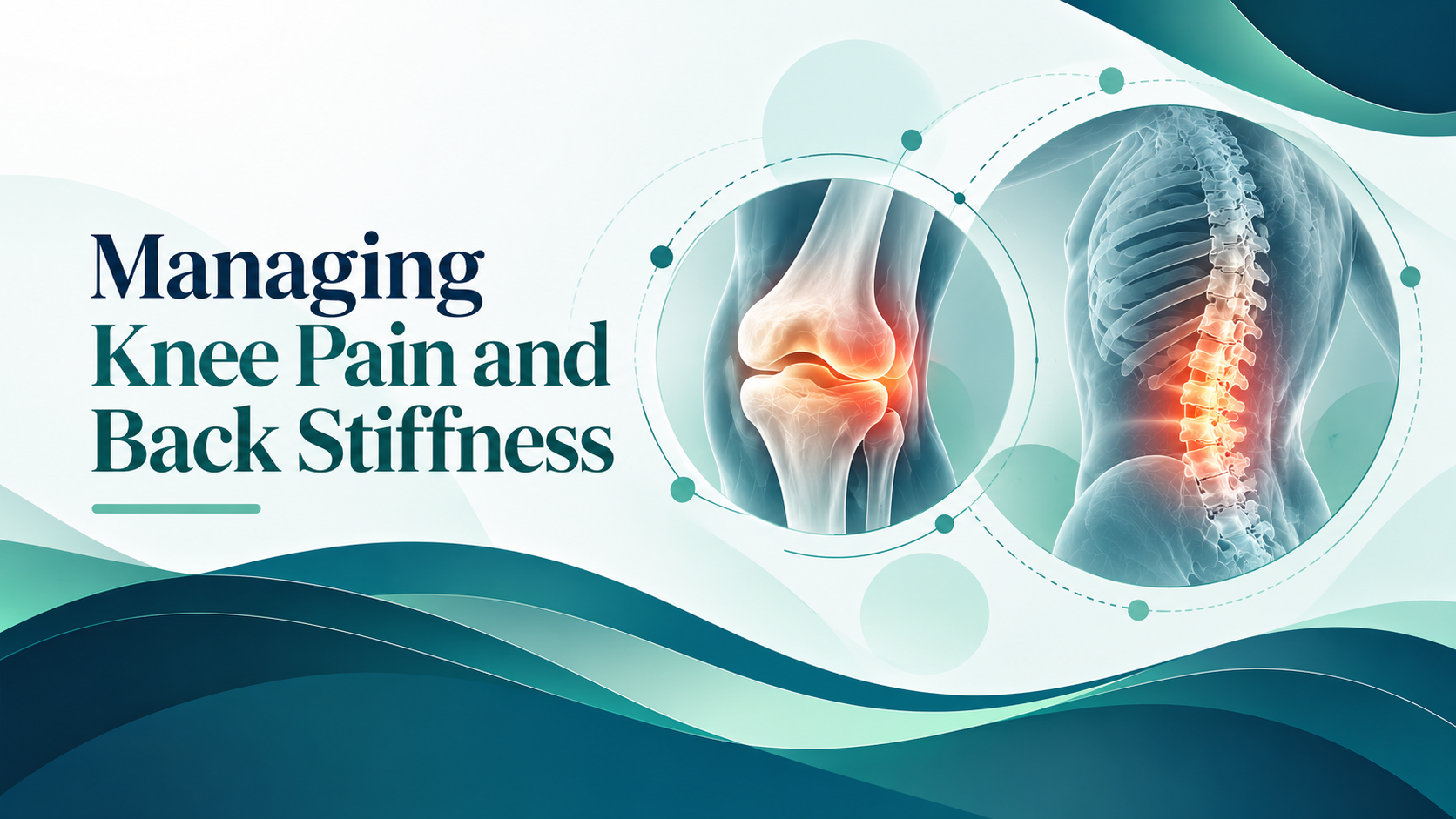
Common knee pain causes include joint changes, muscle weakness, previous injuries, and repeated strain. Long hours of sitting can also contribute to back stiffness and reduced mobility. A balanced care routine combines gentle exercises, better posture, regular movement, and suitable pain management. These steps may help improve comfort, but persistent symptoms require professional assessment.
Knee discomfort and back stiffness can make everyday activities harder. Walking, climbing stairs, working at a desk, and getting out of bed may become uncomfortable. Many people rely on pain relief tablets without addressing habits that contribute to their symptoms.
Understanding your symptoms can help you make more informed decisions about daily movement. At NexGen Health, our joint care resources provide additional information about maintaining an active lifestyle.
Understanding Why Knee and Back Discomfort Develops
Several factors can contribute to joint discomfort, including repeated pressure, muscle weakness, and changes in joint structures. Understanding these factors can help you choose suitable exercises and daily adjustments.
How Hip and Leg Muscles Affect Your Knees
Your hips, thighs, and knees work together whenever you walk or climb stairs. Weak hip and thigh muscles may affect knee alignment and increase discomfort during movement. Long periods of sitting can weaken supporting muscles over time. Gentle strengthening exercises may improve stability and make everyday activities easier.
Cartilage Changes and Joint Health
Cartilage cushions the ends of bones and helps joints move smoothly. As cartilage changes over time, some people experience pain, stiffness, or reduced movement.
A suitable knee arthritis home care routine may include gentle exercise, weight management when appropriate, and professional guidance. These steps can help manage symptoms, although they cannot reverse every type of joint damage.
Why Sitting Can Cause Back Stiffness
Sitting for long periods may leave your back muscles feeling tight and tired. Slouching can also place extra strain on your back and surrounding muscles. Taking regular breaks and changing positions throughout the day may help reduce discomfort. Gentle stretching can also help you move more comfortably after sitting.
Exercises to Improve Strength and Flexibility
Regular movement can help strengthen the muscles supporting your knees and back. Choosing suitable exercises is important, especially when discomfort limits your usual activities.
Gentle Exercises for Hip and Knee Flexibility
Your hips and calves help support comfortable knee movement during everyday activities. Gentle exercises can improve flexibility and reduce tightness without requiring special equipment.
Standing Calf Stretches
- Stand facing a wall and place both hands against it for support.
- Step one foot backward while keeping your heel on the floor.
- Bend your front knee slightly and lean forward until you feel a gentle stretch.
- Hold briefly, then switch legs.
Gentle Hip Flexor Stretches
- Stand in a comfortable split stance, keeping one foot ahead of the other.
- Bend your front knee slightly while keeping your torso upright.
- Move your hips forward gently until you feel a mild stretch.
- Return to your starting position and switch sides.
Start slowly and avoid forcing any movement beyond your comfortable range. Stop if an exercise causes sharp pain or worsens your symptoms.
Everyday Changes That Support Better Mobility
Small changes to your daily routine may help reduce unnecessary strain on your knees and back. Focus on comfortable movement, suitable posture, and regular breaks rather than remaining in one position for too long.
Create a Comfortable Workstation
Adjust your chair so your feet rest comfortably on the floor. Keep your hips supported and position your screen near eye level to avoid leaning forward. Use a supportive chair and change positions throughout the working day. Standing briefly or walking around regularly can help prevent prolonged stiffness.
Improve Your Sleeping Position
Your sleeping position can influence how comfortable your back and knees feel overnight. Side sleepers may find a pillow between their knees helpful for comfort and support. If you sleep on your back, try placing a pillow beneath your knees. Adjust the position according to your comfort rather than forcing your spine into a particular posture.
Gentle movement after waking may also provide back stiffness relief when your muscles feel tight. Persistent or worsening morning discomfort should be assessed by a healthcare professional.
Choose Low-Impact Activities
Walking on level ground, swimming, and stationary cycling can help maintain fitness with less impact than some strenuous activities. Start at a comfortable pace and increase activity gradually.
Movement helps maintain muscle strength and supports normal joint function. Avoid activities that repeatedly worsen your symptoms, and seek guidance if you are unsure which exercises suit you.
For more information, read our guide to Understanding Knee and Joint Pain.
Managing Discomfort With Heat, Cold, and Topical Care
Combining suitable comfort measures with regular movement may help manage everyday aches. Choose treatments according to your symptoms, and avoid relying on topical products alone.
When to Use Cold or Warm Compresses
Cold packs may help ease pain and swelling after a recent injury or activity. Wrap the pack in a towel and apply it for around fifteen minutes. Warm compresses may help relieve muscle tightness and temporary stiffness. Avoid applying excessive heat, and never place ice directly against your skin.
A simple knee arthritis home care plan should also include appropriate activity and professional advice when needed. Heat and cold may provide temporary comfort, but they do not treat every underlying joint condition.
Topical Creams and Gentle Massage
Some people use topical creams or gentle massage to manage discomfort around their knees and back. Massage the surrounding muscles gently and avoid pressing directly on painful or swollen areas. Topical products may provide temporary symptom relief, but their effects vary. They should not replace medical assessment when pain is persistent or severe.
Topical Joint & Muscle Careov Fast Relief Pain Cream
Explore our topical option for joint and muscle discomfort. Use according to the product directions alongside suitable movement and daily care.

When to Seek Professional Help
Professional physical therapy for joint mobility may help when stiffness or pain affects your daily activities. A physiotherapist can assess your movement and develop an exercise plan suited to your needs.
Seek prompt medical assessment if your knee locks, repeatedly gives way, or becomes severely swollen. Back pain with new leg weakness, numbness around the groin, or loss of bladder or bowel control requires emergency medical attention.
Final Thoughts
Managing knee discomfort and back stiffness starts with understanding your symptoms and adjusting your daily habits. Gentle strengthening, regular movement, and better workstation ergonomics can support comfortable everyday activity.
Use heat, cold, or topical products only when appropriate for your symptoms. Seek professional guidance when pain persists, worsens, or limits your normal routine. Consistent, manageable changes can help you maintain mobility without pushing your body beyond its limits.
This article provides general information and does not replace professional medical advice or diagnosis. Consult a qualified healthcare professional before starting new exercises or treatments, especially after an injury or when you have an existing medical condition. Individual results vary, and topical products or nutritional supplements do not guarantee pain relief or improved mobility.