
Niacinamide Benefits for Oily Skin: How Vitamin B3 Helps Control Oil and Refine Pores
Niacinamide, a form of vitamin B3, may help regulate excess oil, improve the appearance of enlarged pores, reduce uneven skin tone, and strengthen the skin's protective barrier. Unlike harsh oil-control treatments, it supports skin balance without deliberately stripping away natural moisture.
Does your face become shiny just a few hours after washing? Do your pores appear more noticeable throughout the day? Managing oily skin can be particularly challenging during Pakistan's hot and humid summers. However, frequent washing and aggressive skincare treatments may cause irritation without addressing the underlying problem.
Niacinamide offers a gentler approach to managing excess oil while supporting overall skin health.
How Does Niacinamide Work on Oily Skin?
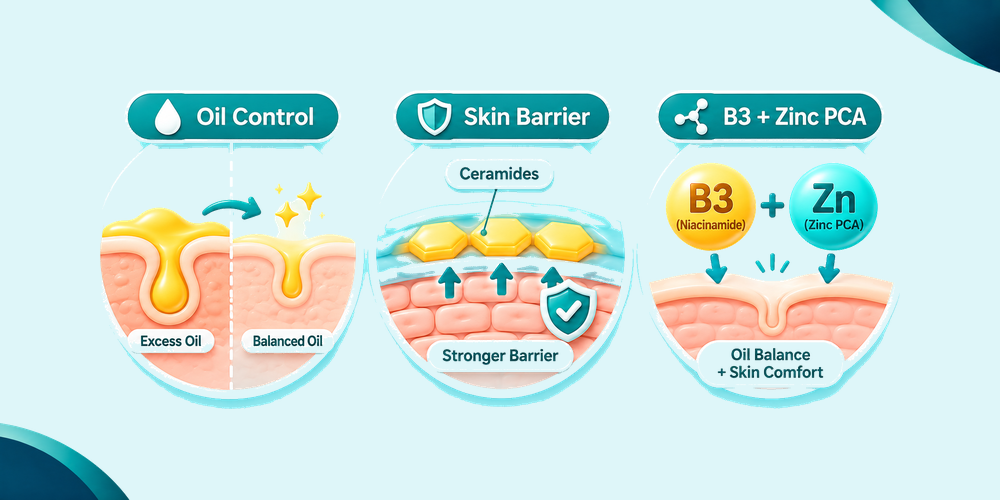
Niacinamide is a water-soluble form of vitamin B3 that supports several important functions within the skin.
Helps Regulate Excess Oil
Sebaceous glands naturally produce sebum, an oily substance that protects the skin and helps retain moisture. However, excessive sebum can contribute to unwanted shine, congestion, and more noticeable pores. Research suggests that topical niacinamide may help reduce excess surface oil over time without stripping the skin of its essential natural oils.
Strengthens the Skin Barrier
Niacinamide supports the production of ceramides, which are natural lipids that help maintain the skin's protective barrier. A healthy skin barrier reduces moisture loss and improves the skin's ability to tolerate environmental stressors and skincare ingredients. This makes niacinamide a useful addition to an oily skin care routine, particularly for people experiencing both oiliness and dehydration.
How Does Zinc PCA Complement Niacinamide?
Zinc PCA is a skincare ingredient that combines zinc with pyrrolidone carboxylic acid (PCA), a compound associated with the skin's natural moisturizing system. It may help manage excess oil while supporting skin hydration and comfort. When combined with niacinamide, it can complement an oil-balancing skincare routine, although the effectiveness depends on the overall formulation and individual skin response.
Key Niacinamide Benefits for Oily and Blemish-Prone Skin
Regular use of niacinamide may provide several skincare benefits:
- Controls excess shine: Helps manage surface oiliness without aggressively drying the skin.
- Improves pore appearance: May make enlarged pores less noticeable by reducing excess oil and improving skin texture.
- Reduces uneven skin tone: Helps gradually improve the appearance of dark marks left behind by acne.
- Supports skin comfort: Its anti-inflammatory properties may help reduce mild redness and irritation.
- Strengthens the moisture barrier: Supports natural ceramide production and reduces moisture loss.
These improvements generally develop with consistent use rather than overnight application.
What Causes Enlarged Pores on the Face?
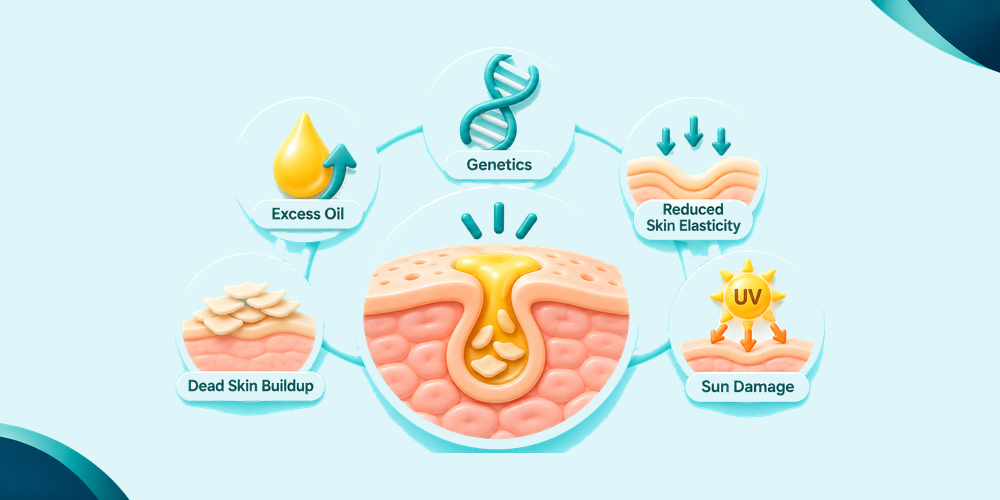
Pores are natural openings in the skin through which oil and sweat reach the surface.
Several factors can make them appear larger:
- Excessive sebum production
- Accumulation of oil and dead skin cells
- Genetic predisposition
- Reduced skin elasticity
- Long-term sun damage
Hot and humid weather can also make facial oiliness more noticeable, increasing the visible appearance of pores. Managing enlarged pores on the face involves controlling excess oil, maintaining a healthy skin barrier, and preventing congestion.
Using a suitable facial cleanser is an important starting point. Explore our guide to choosing the best cleanser for oily skin to understand which cleansing options may suit your skin.
Despite popular skincare myths, pores cannot physically open and close like doors. Warm water may help loosen surface buildup, but cold water cannot permanently shrink pores. Effective skincare can make them less noticeable rather than change their natural size.
Which Niacinamide Concentration Is Best for Your Skin?
A higher concentration does not necessarily deliver better results. Choosing the right strength depends on your skin's needs and tolerance.
| Concentration | Potential Benefits | Best Suited For |
|---|---|---|
| 2%–5% | Barrier support, oil regulation, and improved skin tone | Beginners and sensitive skin |
| 10% | Oil management and improved skin texture | Oily or combination skin that tolerates the formulation |
| Above 10% | Limited evidence of additional benefits | Experienced users with good skin tolerance |
Many established niacinamide benefits have been observed at concentrations between 2% and 5%. Higher concentrations may be suitable for some individuals but can also increase the likelihood of irritation.
How to Use Niacinamide in Your Skincare Routine
Introducing niacinamide gradually allows you to assess your skin's tolerance, particularly when using a 10% serum. Beginners can start with every other day application and increase to once daily if their skin responds well.
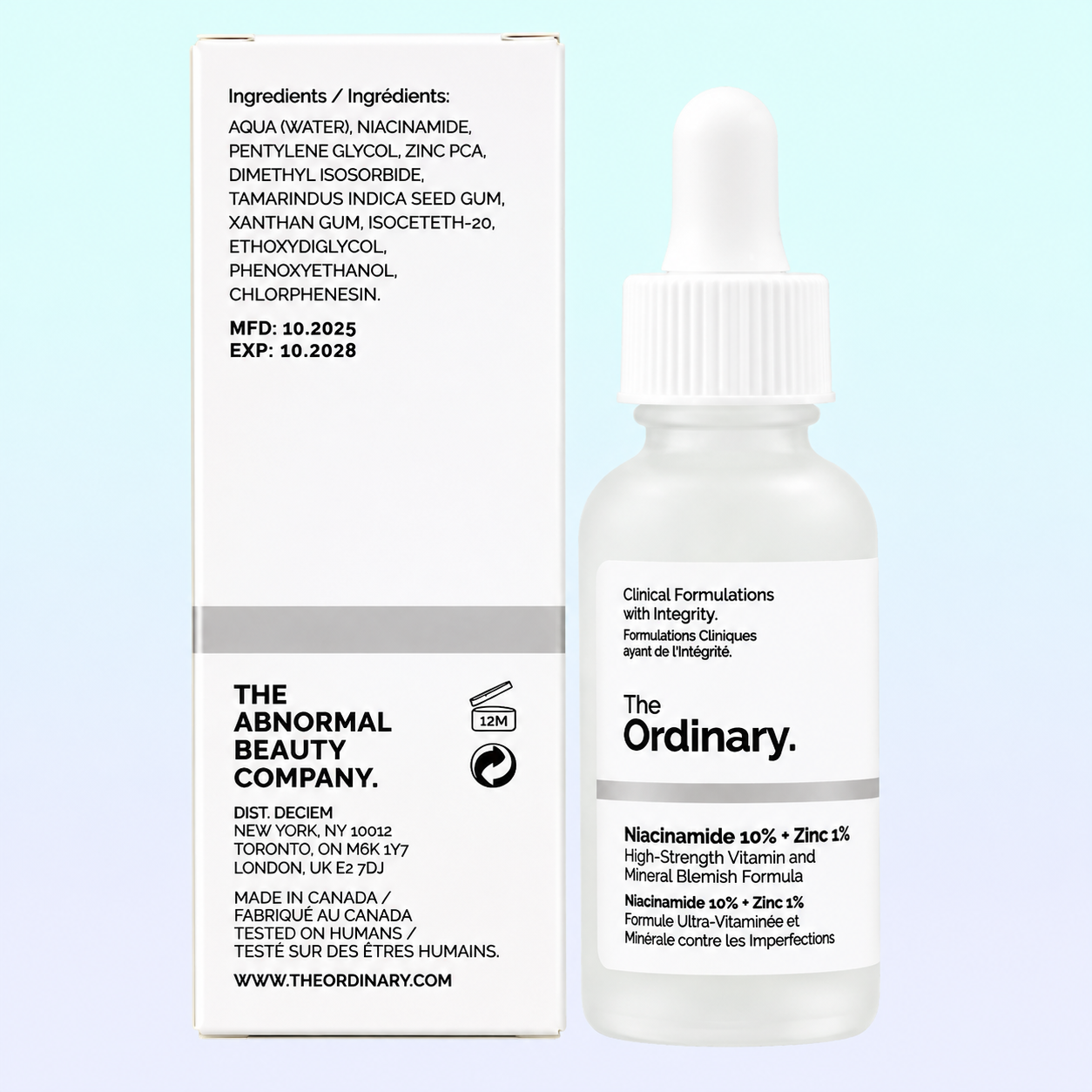
Balance Excess Oil & Refine Visible Pores
A lightweight serum combining 10% niacinamide and 1% zinc PCA to help manage excess oil, improve visible pore appearance, and support a balanced, healthier-looking complexion.
Step 1: Cleanse Your Face
Use a gentle gel or foaming cleanser to remove excess oil, dirt, and impurities without leaving your skin feeling excessively dry.
Step 2: Apply Niacinamide Serum
Apply two to three drops to clean, dry skin and spread gently across your face. Avoid applying excessive amounts, as this may increase irritation or cause product pilling.
Step 3: Follow With a Lightweight Moisturizer
Choose a lightweight, non-comedogenic moisturizer to maintain hydration without adding unnecessary heaviness. If your skin feels tight, sensitive, or irritated, read our guide to restoring a damaged skin barrier.
Step 4: Finish With Sunscreen
During the morning, apply a broad-spectrum sunscreen with SPF 30 or higher. Sun protection helps limit premature skin ageing, uneven pigmentation, and the loss of elasticity that can make pores more noticeable.
Can Niacinamide Be Used With Other Skincare Ingredients?
Niacinamide is compatible with many commonly used skincare ingredients.
| Ingredient | Can It Be Used With Niacinamide? |
|---|---|
| Hyaluronic acid | Yes. Supports skin hydration. |
| Salicylic acid | Yes. Helps address clogged pores and congestion. |
| Vitamin C | Yes. Can complement care for uneven skin tone. |
| Retinol | Yes. May complement barrier support during retinol use. |
| Ceramides | Yes. Supports the protective skin barrier. |
Although these ingredients are generally compatible, introducing multiple active ingredients simultaneously may increase irritation.
For more guidance, explore our active skincare ingredients routine guide.
Does Niacinamide Cause Skin Purging?
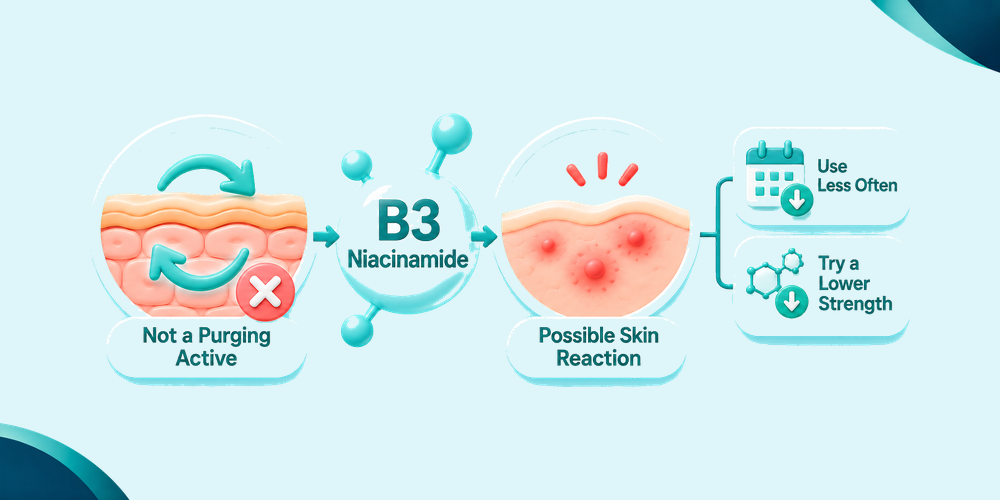
Niacinamide does not significantly accelerate skin cell turnover in the way that retinoids and certain exfoliating acids do. Therefore, true skin purging is not generally expected. If you develop redness, itching, burning, or new breakouts after introducing a niacinamide serum, your skin may be reacting to its concentration or another ingredient in the formulation.
Reduce application frequency or discontinue use if irritation persists. A lower-strength formulation may be more suitable for sensitive skin.
How Long Does Niacinamide Take to Show Results?
Niacinamide requires consistent use to produce noticeable improvements.
| Skin Concern | Approximate Timeframe |
|---|---|
| Excess oiliness | 2–4 weeks |
| Skin barrier improvement | 2–4 weeks |
| Uneven skin tone | 4–8 weeks or longer |
| Visible pore appearance | 4–8 weeks or longer |
These timeframes are general estimates. Results vary depending on concentration, formulation, skin type, and consistency of application.
Niacinamide can help manage excess oil, improve visible pore appearance, and support a healthier skin barrier. Choosing a suitable concentration and combining it with gentle cleansing, lightweight hydration, and daily sunscreen is more beneficial than relying on high-strength treatments alone.
Final Thoughts
An effective oily skin care routine should focus on maintaining balance rather than eliminating natural oils. Niacinamide offers a versatile approach to managing shine, uneven texture, and enlarged pores without relying on aggressive skincare treatments. Understanding niacinamide benefits and introducing the ingredient gradually can help you build a routine that supports healthier, more comfortable skin.
Explore more skincare guidance at NexGen Health.
This article is for educational purposes and does not replace professional dermatological advice. Always patch test new skincare products and discontinue use if persistent irritation occurs. Consult a qualified dermatologist for ongoing acne, redness, or other skin concerns.